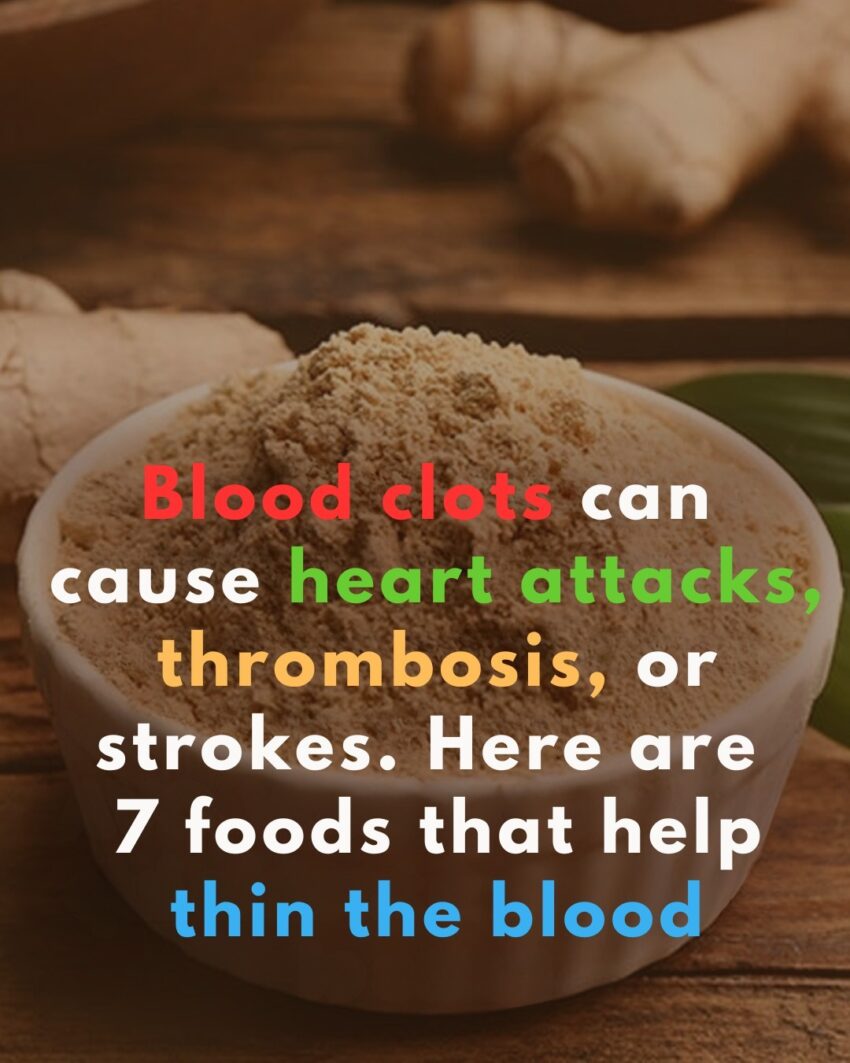
It’s true that blood clots can lead to serious problems like heart attacks, strokes, or thrombosis, but the idea that a few foods can “thin your blood” enough to prevent this is overstated.
⚠️ First, the important truth
- Dangerous clots are treated with medical anticoagulants, not food alone
- Foods can have mild effects, but they are supportive, not a replacement for treatment
- If you’re on blood thinners, some foods can interfere with medication
🥗 Foods that may support healthy blood flow (mild effects)
🧄 Garlic
- Contains compounds that may slightly reduce clotting tendency
- Effect is mild compared to medication
🐟 Fatty fish
- Rich in omega-3s (like salmon, sardines)
- May help reduce inflammation and support circulation
🫒 Olive oil
- Heart-healthy fats can support overall cardiovascular health
🫚 Ginger
- May have mild blood-thinning properties
- Often used for digestion too
🧅 Onion
- Contains natural compounds that may affect platelet function
🌶️ Turmeric
- Contains curcumin, which has anti-inflammatory effects
🍓 Berries
- Rich in antioxidants that support blood vessels
🚨 Important warning
If you are taking blood thinners (like warfarin or aspirin):
- Don’t suddenly increase foods like garlic, ginger, or turmeric in large amounts
- Vitamin K–rich foods (like spinach) can affect some medications
Always check with a doctor before changing diet significantly.
🧠 Bottom line
- These foods can support heart and blood vessel health
- But they do NOT replace medical treatment for clots
- The phrase “blood-thinning foods” is often overhyped
If you want, I can tell you the real early signs of dangerous blood clots—those are much more important to recognize than viral food lists.
