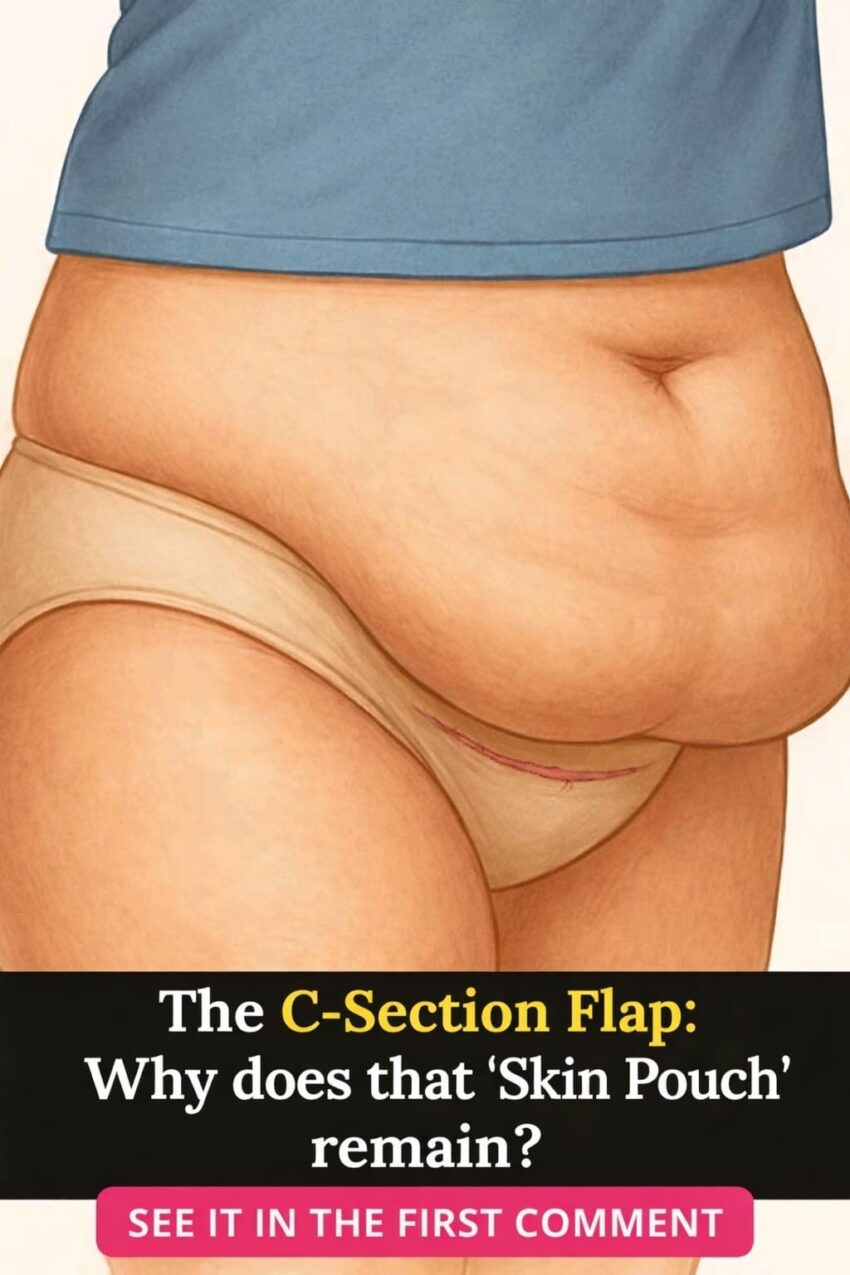
That “C-section flap” people talk about is commonly called a “C-section shelf” or “pooch.” It’s very common after a cesarean delivery (Cesarean section) and doesn’t mean anything is wrong.
🧠 Why it happens
1. Healing and scar tissue
- The incision creates scar tissue that can pull the skin slightly inward
- The area above it may sit outward, creating a small pouch effect
2. Skin and muscle stretching from pregnancy
- During pregnancy, skin and abdominal muscles stretch
- They don’t always return fully to pre-pregnancy tightness
3. Fat distribution changes
- The lower abdomen tends to hold onto fat more easily after pregnancy
- Hormonal changes can influence this
4. Weakened core muscles
- The abdominal wall may be weakened or separated (diastasis recti)
- This can make the area look more pronounced
⚠️ What it is NOT
- Not a “toxin buildup”
- Not caused by a specific vitamin or food
- Not something dangerous in most cases
💡 What can help (gradually)
- Gentle core-strengthening exercises (after doctor approval)
- Maintaining a healthy weight
- Good posture
- Time—healing can take months to a year or more
In some cases:
- Physiotherapy for core recovery
- Cosmetic procedures (optional, not medically required)
❤️ Bottom line
The “C-section flap” is a normal result of surgery + pregnancy changes, not a problem or failure. Many women have it to some degree.
If you want, I can share safe post-C-section exercises or ways to tell if it’s just normal tissue vs something like a hernia.
