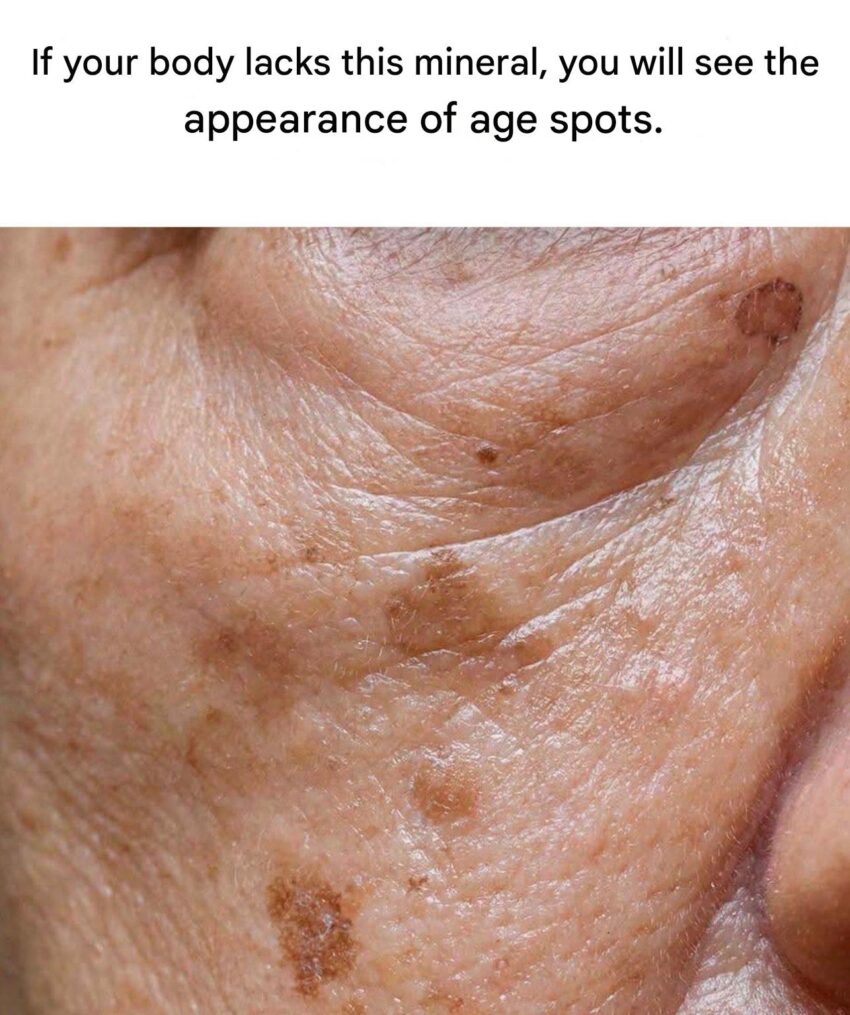
That statement is misleading. Age spots (also called liver spots) are not caused by a single mineral deficiency.
Age spots are medically known as solar lentigines, and they are mainly caused by sun exposure over time, not lack of nutrients.
What actually causes age spots
- Ultraviolet (UV) radiation from the sun (main cause)
- Aging skin, which becomes less able to repair sun damage
- Genetics (some people are more prone)
What about “minerals”?
No specific mineral deficiency directly causes age spots. However:
- Low antioxidants (like vitamins C and E) may reduce skin protection against UV damage
- Poor nutrition can affect overall skin health, but it does not directly create age spots
Real risk factors
- Frequent sun exposure without sunscreen
- Tanning beds
- Fair or sensitive skin
- Aging (usually after age 40+)
Important truth
Age spots are benign skin pigmentation changes, not a disease caused by missing nutrients.
How to prevent them
- Use sunscreen (SPF 30+)
- Avoid excessive sun exposure
- Wear protective clothing
- Use antioxidant-rich diet (supportive, not curative)
Bottom line
The idea that “lack of a mineral causes age spots” is not scientifically correct. The real cause is long-term sun damage.
If you want, I can tell you which skin changes actually are linked to nutrient deficiencies—some of them are real and important to know.
