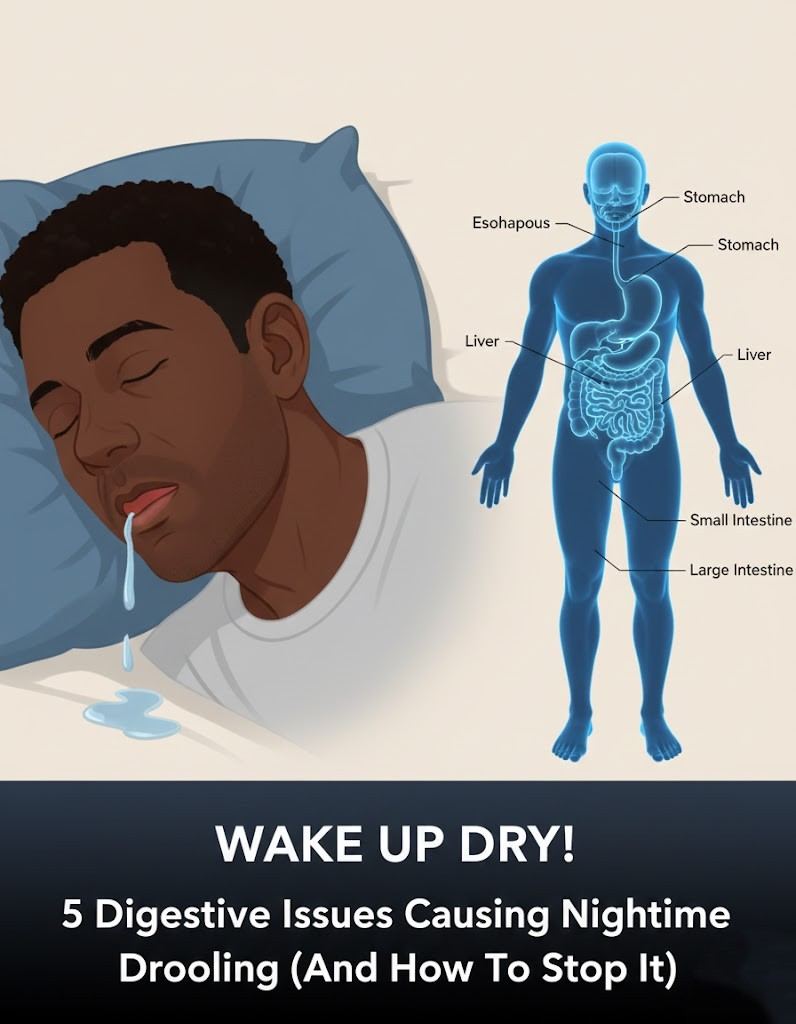
Nighttime drooling (sleep-related sialorrhea) sounds alarming, but in most adults it’s usually not a “saliva problem” itself—it’s more about how saliva is handled during sleep and what’s happening in the mouth, nose, and upper digestive tract.
The idea that “5 digestive issues cause nighttime drooling” is a bit oversimplified, but there are a few gut-related conditions that can contribute, especially through reflux and swallowing changes.
Here’s a clearer breakdown.
1) Acid reflux / GERD (most common digestive link)
Gastroesophageal reflux disease
When stomach acid flows upward at night, your body produces extra saliva to neutralize it. That extra saliva can pool and leak out during sleep.
Clues:
- Sour taste in mouth in the morning
- Heartburn or chest burning
- Cough at night or hoarseness
How to reduce it:
- Don’t eat 2–3 hours before bed
- Elevate your head while sleeping
- Avoid spicy/fatty foods at night
2) Hiatal hernia
A condition where part of the stomach pushes upward through the diaphragm, making reflux more likely.
Why it matters: it increases nighttime acid exposure → more reflex saliva production.
Fix approach: similar to GERD (diet, posture, sometimes medication).
3) Swallowing dysfunction triggered by reflux irritation
Chronic acid exposure can irritate the throat and weaken the normal “swallow reflex” during sleep.
This doesn’t directly produce saliva—but it reduces how well saliva is cleared.
4) Delayed stomach emptying (gastroparesis-like pattern)
When food stays longer in the stomach, pressure and reflux risk increase at night.
Result: more reflux stimulation → more saliva reflexively produced.
5) Upper GI irritation / gastritis
Inflammation of the stomach lining can increase nausea/reflux sensitivity, which indirectly triggers salivation during sleep.
Important: Not all causes are digestive
Even though digestion can contribute, most cases of nighttime drooling are actually due to:
- Sleeping on your side or stomach
- Nasal congestion / mouth breathing
- Sleep apnea
- Certain medications (sedatives, antipsychotics, etc.)
- Reduced swallowing during deep sleep stages
How to stop nighttime drooling (practical steps)
Sleep adjustments
- Sleep on your back (side/stomach increases drooling)
- Elevate head 10–15 cm
- Use a supportive pillow to keep head aligned
If reflux is suspected
- Avoid late meals and heavy dinners
- Reduce caffeine, spicy food, alcohol
- Consider discussing antacids or acid reducers with a doctor
Fix nasal breathing issues
- Treat allergies or congestion
- Saline rinse or steam before bed
Oral habits
- Maintain good dental hygiene
- Check for dental misalignment or mouth breathing habits
When to get checked
See a doctor if drooling is new, severe, or comes with:
- choking or breathing pauses at night
- significant heartburn or chest pain
- difficulty swallowing
- unexplained weight loss
If you want, I can help you narrow it down: tell me whether you also have heartburn, snoring, or blocked nose at night, and I’ll pinpoint the most likely cause for your situation.
