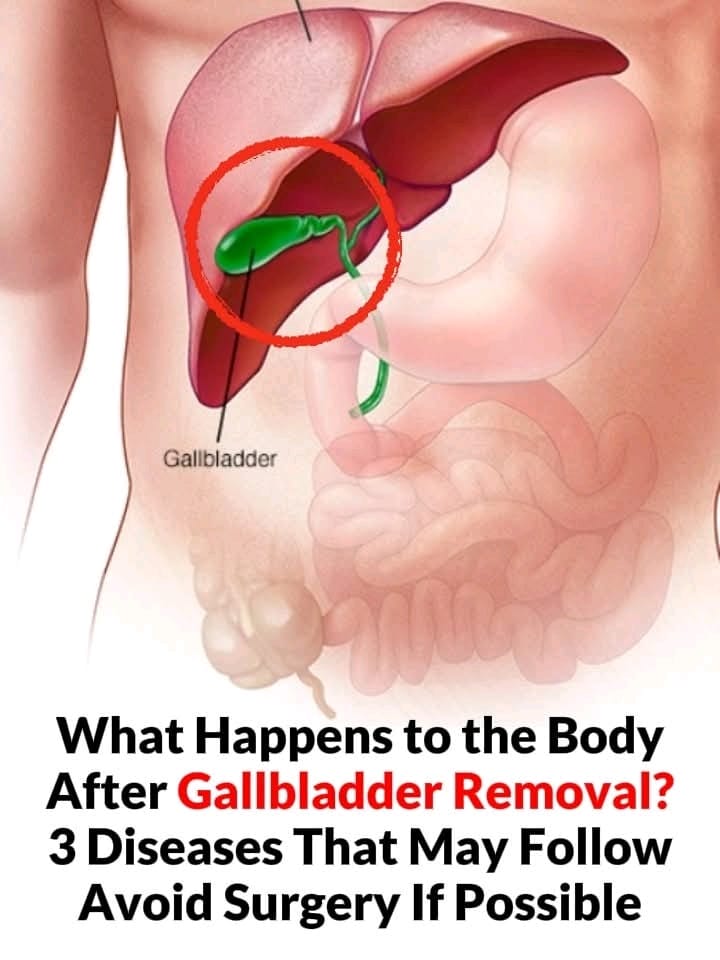
That headline is misleading. It suggests that gallbladder removal causes specific diseases and should be avoided, which isn’t how medicine works.
🧠 What the surgery actually is
Removing the gallbladder is called Cholecystectomy.
It’s commonly done for:
- painful gallstones
- infection or inflammation
- blocked bile ducts
For many people, it prevents serious complications, not causes them.
🔄 What changes in the body afterward
The gallbladder stores bile. After removal:
- bile flows directly from the liver into the intestine
- digestion still works, but bile is less “stored and concentrated”
👉 Most people adapt within weeks.
⚠️ Real (but usually mild) effects
💩 1. Digestive changes
- occasional loose stools
- bloating after fatty meals
Often temporary and manageable.
🍽️ 2. Fat tolerance changes
- large, greasy meals may feel uncomfortable
- smaller, balanced meals help
🚽 3. Rare long-term issue
Some people develop bile-related diarrhea, but:
- it’s uncommon
- it can be treated
❌ The “3 diseases” claim
There is no solid evidence that gallbladder removal directly causes a fixed set of diseases like:
- organ failure
- chronic systemic illness
These claims are exaggerated or taken out of context.
⚠️ Why “avoid surgery if possible” is incomplete advice
- Avoid unnecessary surgery ✔️
- But necessary surgery can prevent serious harm ✔️
Untreated gallbladder problems can lead to:
- severe infection
- pancreatitis
- life-threatening complications
🧠 Bottom line
Gallbladder removal is generally safe, and most people live normal lives afterward. The risks of not treating serious gallbladder disease are often higher than the surgery itself.
If you want, I can explain:
- what foods to eat after gallbladder removal
- or how to know if your symptoms actually require surgery vs lifestyle changes
