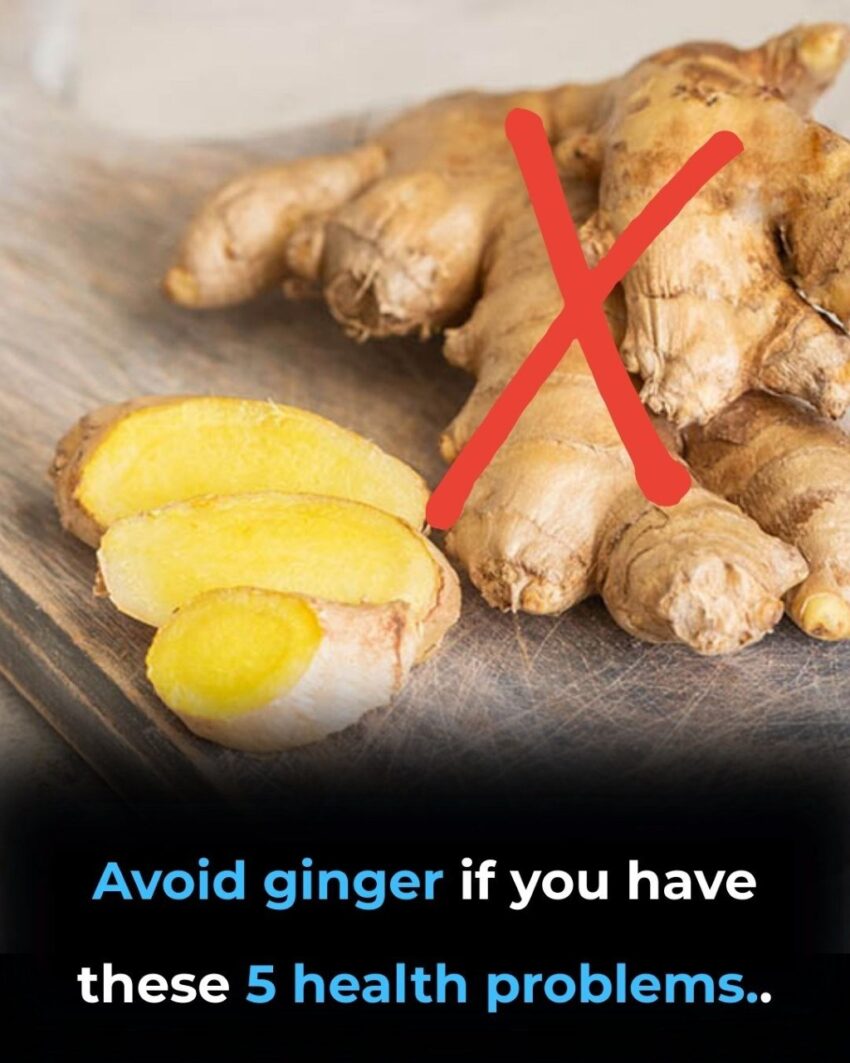
That headline is another clickbait oversimplification. Ginger isn’t dangerous for most people—but in some specific conditions or situations, it may need caution.
Here’s the real, medically grounded version:
🌿 Ginger and health overview
Ginger is commonly used for digestion, nausea, and mild inflammation. It’s generally safe in normal food amounts.
But higher doses (supplements, extracts, strong teas) can matter in certain conditions.
⚠️ When to be careful with ginger
1. 🩸 Blood thinning conditions or medicines
Ginger can have a mild blood-thinning effect.
Be cautious if you take:
- blood thinners (e.g., warfarin, aspirin)
- or have bleeding disorders
👉 Risk: increased bruising or bleeding in high doses
2. 🫀 Low blood pressure
Ginger may slightly lower blood pressure.
If you already have:
- Hypotension
👉 It could make dizziness or weakness worse in large amounts
3. 🍬 Diabetes (on medication)
Ginger may lower blood sugar slightly.
In Type 2 Diabetes patients on medication:
- risk of low blood sugar increases if intake is high
4. 🤰 Pregnancy (high doses)
Small amounts in food are usually fine, but:
- high-dose supplements are sometimes avoided unless advised by a doctor
- mainly due to limited safety data at high doses
5. 🧪 Gallbladder issues or gallstones (caution, not absolute ban)
Ginger stimulates digestion and bile flow.
In Gallstones:
- it may worsen discomfort in some people
- but evidence is limited and not definitive
❌ What the viral claim gets wrong
- Ginger does NOT need to be “avoided” by most people
- It does NOT cause disease in healthy individuals
- Problems usually relate to dose + medical conditions + drug interactions
🧠 Bottom line
Ginger is safe and beneficial for most people, but caution is needed in specific medical conditions or when taken in high amounts or with certain medications.
If you want, I can list:
- who should actually take ginger daily for benefits
- or safe daily amounts based on health goals (digestion, weight, nausea, etc.)
