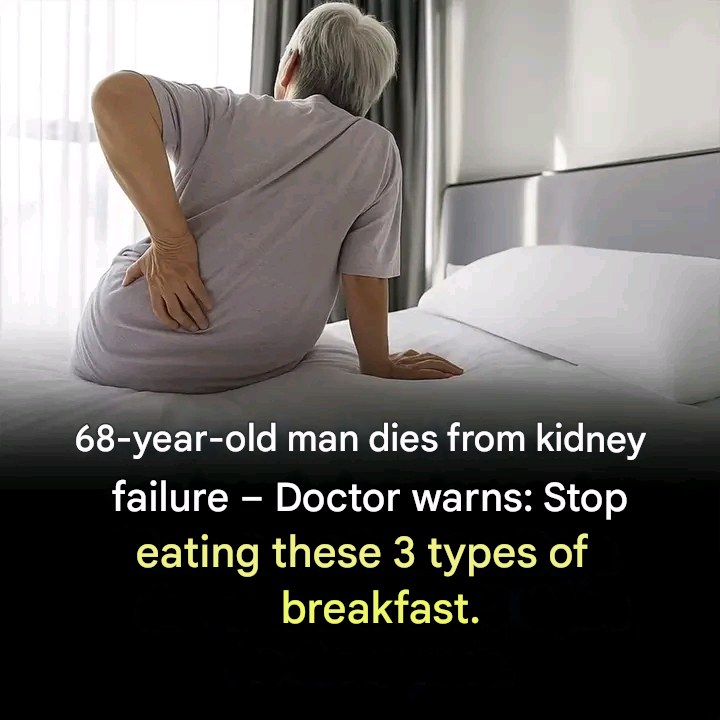
That headline is designed to grab attention, not to give reliable medical guidance.
A single person’s death from kidney failure cannot be linked to “3 breakfast foods” in any scientific way. Kidney failure usually develops over years due to underlying conditions like diabetes, high blood pressure, chronic kidney disease, or certain medications, not from a few specific breakfast items.
🧠 What’s really going on with these claims
Clickbait articles often:
- Use a dramatic story (“68-year-old man dies…”)
- Add authority (“doctor warns…”)
- Then blame specific foods without strong evidence
This oversimplifies a complex medical condition.
🫘 What can actually harm kidneys over time (diet-wise)
Instead of “3 dangerous breakfasts,” doctors generally worry about long-term patterns, such as:
1. Very high sodium intake
- Processed meats (sausages, bacon)
- Instant noodles / packaged breakfasts
- Fast food breakfasts
👉 Can worsen blood pressure, which damages kidneys over time.
2. Excess ultra-processed foods
- Sugary cereals
- Pastries, donuts
- Packaged breakfast snacks
👉 Indirect risk through weight gain, diabetes, and hypertension.
3. Too much protein in people with existing kidney disease
- Protein shakes or very high-protein diets
- Large meat-heavy breakfasts
👉 Not harmful for healthy kidneys, but can stress damaged kidneys.
🧾 Important clarification
For healthy people, there is no proven “breakfast food list” that causes kidney failure.
Kidney damage is usually linked to:
- Poorly controlled diabetes
- High blood pressure
- Smoking
- Long-term medication misuse (like certain painkillers)
- Genetic conditions
🧠 Bottom line
This kind of headline:
“Doctor warns: stop eating these 3 breakfast types”
is usually marketing, not medical science.
What actually protects kidneys is:
- controlling blood pressure
- managing blood sugar
- staying hydrated
- eating a balanced, low-processed diet overall
If you want, I can break down:
- a real kidney-friendly breakfast list
- or early warning signs of kidney disease that actually matter (based on medical guidelines)
