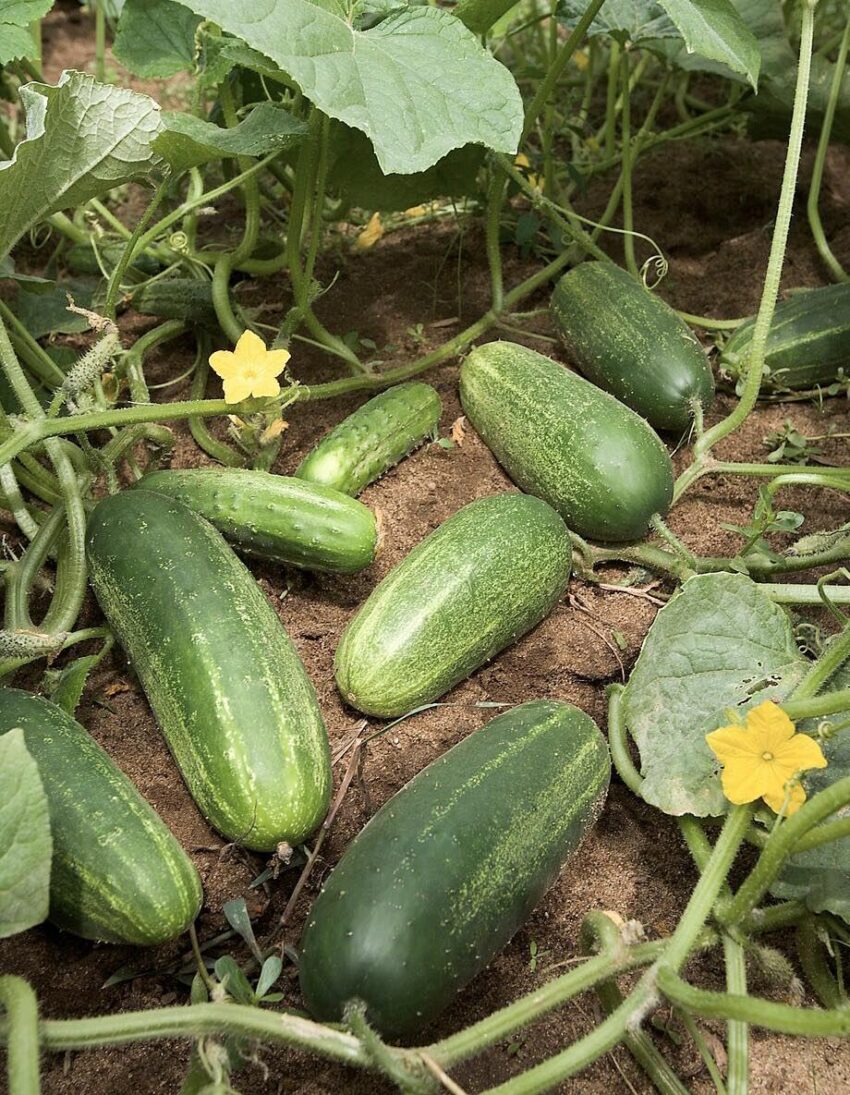
Armenian cucumber is a long, light-green vegetable that looks like a cucumber but is actually a type of melon.
Its scientific classification is Cucumis melo var. flexuosus, often called a snake melon.
🥒 What it is like
- Long, slender, and often twisted shape
- Pale green skin with slight ridges
- Crisp texture and mild, refreshing taste
- Can grow very long (30–90 cm or more)
🌍 Origin
- Despite the name, it’s not originally from Armenia alone
- Grown widely in the Middle East, Mediterranean, and South Asia
- Popular in warm climates due to heat tolerance
🍽️ How it’s eaten
- Eaten raw like cucumber in salads
- Pickled in some cuisines
- Cooked in stews or stir-fries (when mature)
- Best when young and tender (older ones can become seedy)
💪 Nutrition benefits
- Low in calories
- High water content (hydrating)
- Contains fiber, vitamin C, and antioxidants
- Light and easy to digest
🧠 Interesting fact
Although used like a cucumber, botanically it’s closer to a melon variety—this is why it tastes slightly sweeter and less watery than regular cucumbers.
🧾 Bottom line
Armenian cucumber is a long, mild-tasting melon used like a cucumber, popular for salads, hydration, and light summer dishes.
If you want, I can compare it with regular cucumber or tell you how to grow it at home.
