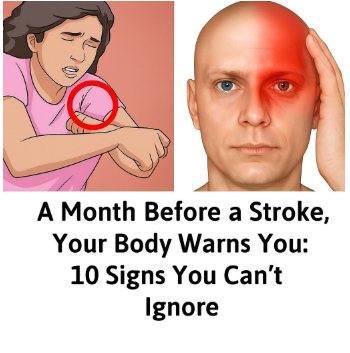
That kind of headline is misleadingly simplified. A stroke does not usually give a clear, reliable “1-month warning checklist.” However, there are early warning signs and risk symptoms that can appear hours, days, or sometimes weeks before a serious event.
A stroke (Stroke) happens when blood flow to part of the brain is blocked or a blood vessel bursts. The key is recognizing early warning signs, not assuming a fixed timeline.
🚨 The most important warning signs (act immediately)
FAST symptoms (emergency signs)
- F – Face drooping on one side
- A – Arm weakness or numbness
- S – Speech difficulty (slurred or confused)
- T – Time to call emergency help
👉 These mean a stroke may be happening right now
⚠️ Possible early warning symptoms (days to weeks in some cases)
These may suggest a higher risk of stroke, but they are not guaranteed predictors:
1. Sudden brief weakness or numbness
- Especially on one side of the body
2. Temporary vision problems
- Blurred or double vision
- Loss of vision in one eye
3. Unexplained dizziness or balance issues
- Trouble walking straight
4. Severe or unusual headaches
- Especially sudden and intense
5. Short episodes of confusion
- Difficulty speaking or understanding
6. Transient ischemic attack (TIA)
- Often called a “mini-stroke”
- Symptoms disappear within minutes or hours but are a major warning sign
7. High blood pressure symptoms
- Head pressure, nosebleeds (sometimes)
🧠 Important truth
- There is no guaranteed 10-sign, 30-day warning system
- Some people have no warning at all
- Others experience a TIA before a full stroke
❤️ Who is at higher risk?
- High blood pressure
- Diabetes
- Smoking
- High cholesterol
- Obesity
- Heart disease
🧾 Bottom line
If symptoms are sudden or unusual—even if they go away—treat them seriously. Early medical attention can prevent permanent damage.
If you want, I can give you:
- a simple “stroke risk self-check”
- or how to reduce stroke risk in daily life
- or differences between stroke, anxiety, and migraine symptoms (they’re often confused)
