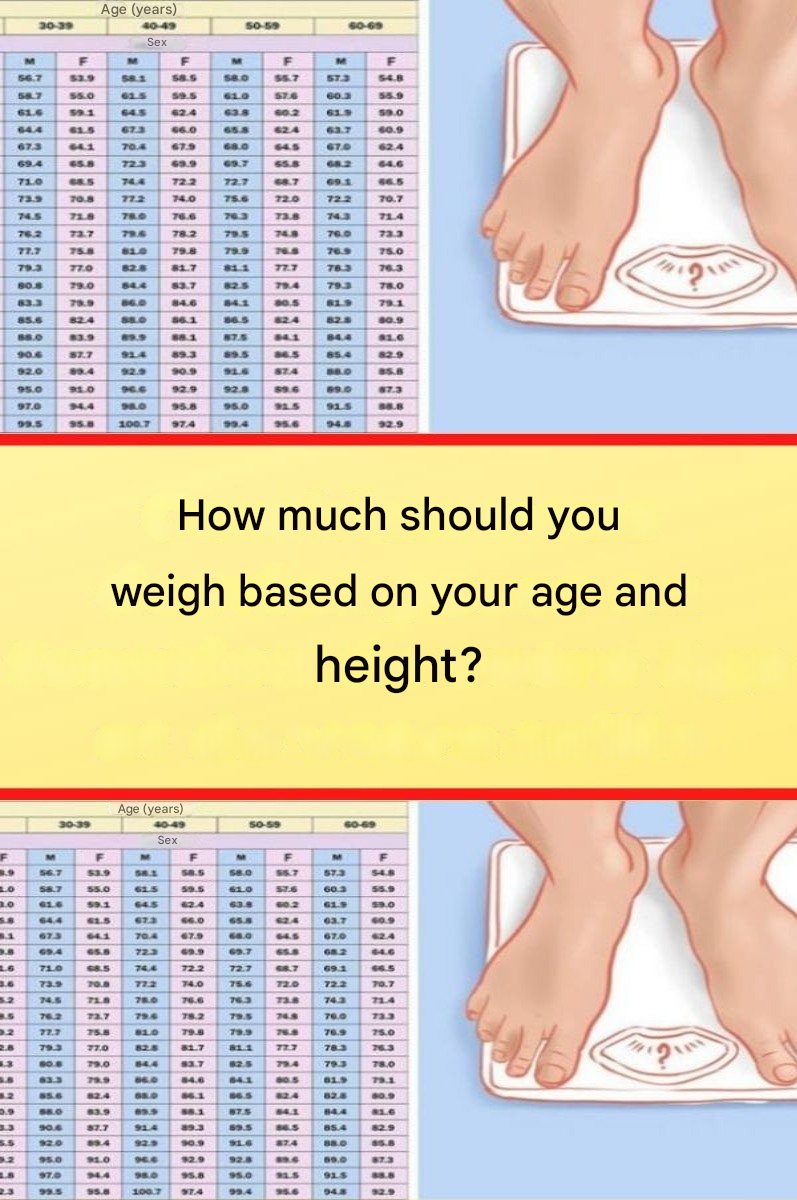
There isn’t a single “correct weight” based only on age and height, but doctors usually use BMI (Body Mass Index) and sometimes age-related considerations to estimate a healthy range.
1) The standard way: BMI (most commonly used)
BMI is calculated using height and weight:
- Healthy BMI range: 18.5 to 24.9
How to estimate your healthy weight range
You can flip the BMI formula to get weight ranges for your height.
Healthy weight (kg) = BMI × height² (meters)
Example:
If you are 170 cm (1.70 m) tall:
- Low end: 18.5 × 1.7² ≈ 53 kg
- High end: 24.9 × 1.7² ≈ 72 kg
So a healthy range would be about 53–72 kg.
2) Age factor (important but secondary)
- Teens (13–19): weight varies due to growth and puberty—BMI-for-age percentiles are used instead of adult BMI.
- Adults (20–59): BMI range works well.
- Older adults (60+): slightly higher BMI (around 23–27) may be okay, because too-low weight can increase health risks.
3) Why “ideal weight” is not exact
Healthy weight depends on:
- Muscle mass (athletes may weigh more but be very healthy)
- Body frame size (small, medium, large build)
- Fat distribution
- Gender
- Health conditions
4) If you want a precise estimate
Tell me:
- Your age
- Your height
- Your gender
I can calculate your personalized healthy weight range more accurately.
