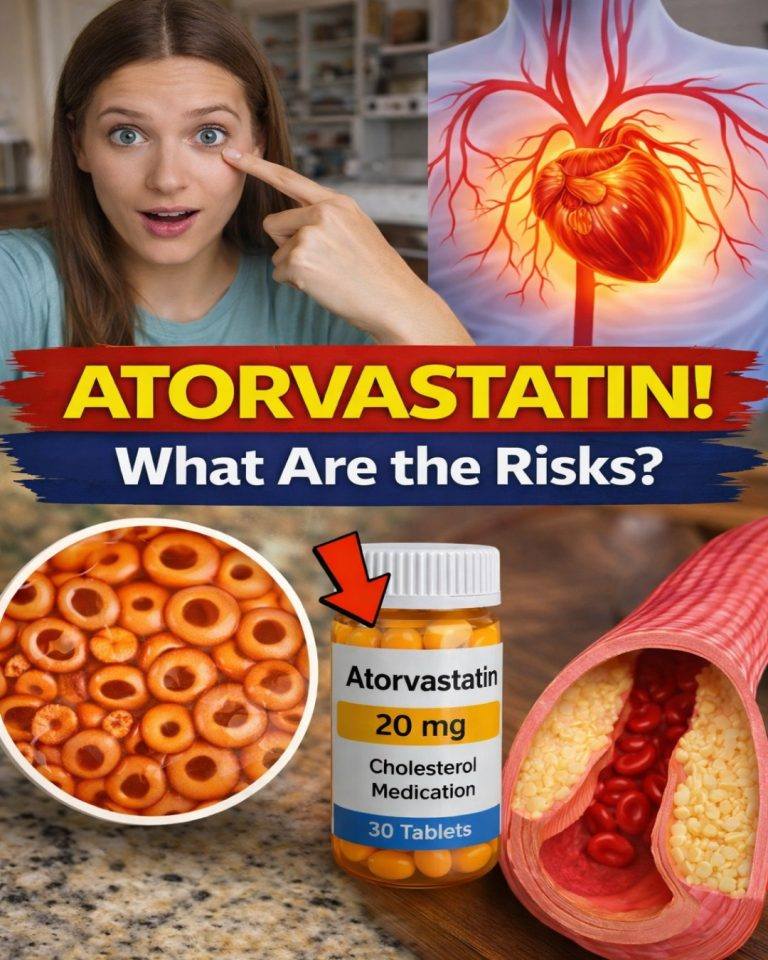
Atorvastatin is a widely used statin that lowers cholesterol and reduces the risk of heart attack and stroke. For most people, it’s safe—but like all medicines, it has possible risks and side effects.
Here’s a clear breakdown of the main risks:
⚠️ 1. Muscle-related problems (most important)
- Mild muscle pain or weakness is the most common complaint
- Usually manageable and reversible
🧨 Rare but serious:
- Rhabdomyolysis (severe muscle breakdown)
- Symptoms: extreme muscle pain, weakness, dark urine
- Can damage kidneys → needs urgent care
🧪 2. Liver effects
- May raise liver enzymes in blood tests
- Usually no symptoms
- Rarely: liver inflammation or injury
- Doctors may monitor liver function
🍬 3. Blood sugar changes
- Slight increase in blood sugar in some people
- Small increased risk of type 2 diabetes
- Heart benefits usually outweigh this risk
🧠 4. Neurological symptoms (uncommon)
- Memory issues or “brain fog” reported in some cases
- Often mild and reversible
🤕 5. Digestive issues
- Nausea
- Constipation or diarrhea
- Stomach discomfort
💊 6. Drug interactions (important risk factor)
Risk increases when combined with:
- Certain antibiotics
- Antifungal medicines
- Some heart or cholesterol drugs
These can raise statin levels → higher muscle risk
🚨 When to seek medical help
Contact a doctor if you notice:
- Severe muscle pain or weakness
- Dark urine
- Yellow skin/eyes
- Unusual fatigue
- Confusion or major mood changes
🧠 Bottom line
- Serious side effects are rare
- Most people tolerate atorvastatin well
- It significantly lowers the risk of heart attack and stroke, which is why it’s widely prescribed
If you want, tell me your dose or symptoms and I can help you understand whether what you’re feeling is expected or something to check with a doctor.
