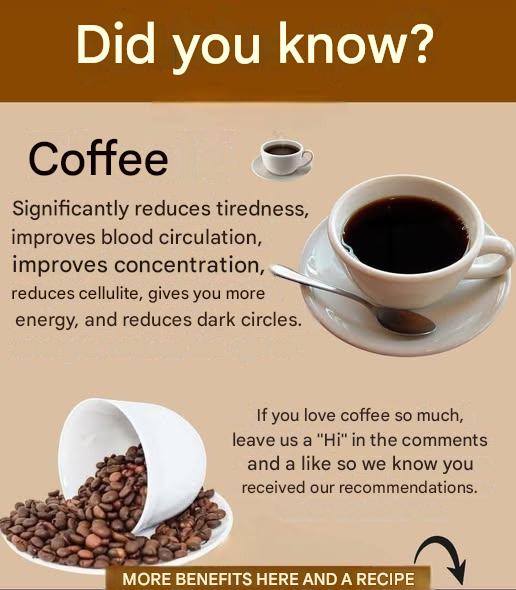
Coffee is a widely consumed drink made from roasted coffee beans, which are the seeds of berries from the coffee plant.
Coffee
☕ What’s in coffee?
The main active compound is caffeine, a natural stimulant that affects the brain and nervous system.
Other compounds include:
- Antioxidants
- Small amounts of vitamins and minerals
- Organic acids that affect flavor
⚡ Effects on the body
Positive effects (when consumed in moderation)
- Increased alertness and focus
- Reduced fatigue
- May improve physical performance
- Contains antioxidants that may support overall health
- May lower risk of some conditions like type 2 diabetes in some studies
Possible downsides
- Anxiety or jitteriness (especially in high amounts)
- Sleep problems if taken late in the day
- Increased heart rate in sensitive people
- Stomach irritation in some individuals
- Can lead to mild dependence (withdrawal headaches, tiredness)
☕ How much is safe?
For most healthy adults:
- Up to about 3–4 cups per day is generally considered moderate
- Sensitivity varies a lot from person to person
🧠 Important context
Coffee is not “good” or “bad” on its own—it depends on:
- Quantity
- Timing
- Individual health conditions
Bottom line
Coffee is a stimulant drink with both benefits and drawbacks, and most research shows it is safe for most people when consumed in moderation.
If you want, I can break down:
- coffee vs tea for health
- or whether coffee affects blood pressure, sleep, or anxiety specifically
