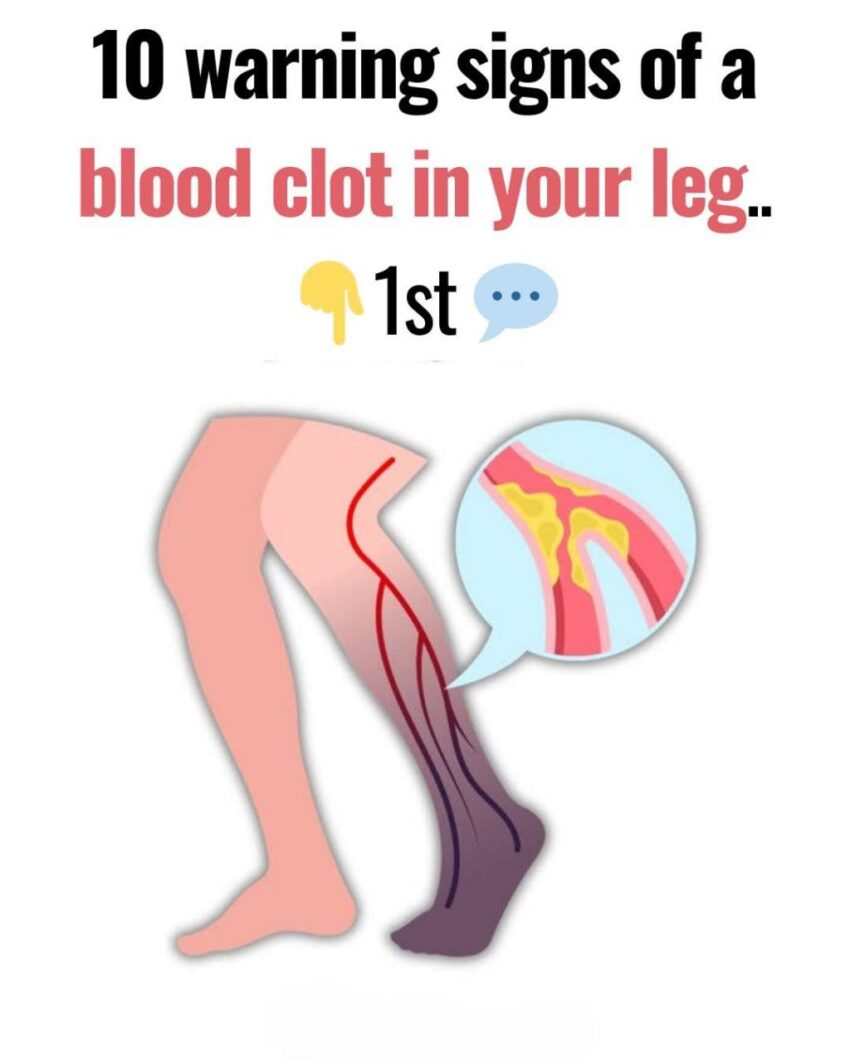
That’s another classic “click to continue” health post format. It’s often exaggerated, but the underlying topic is real: blood clots in the leg (deep vein thrombosis) can be serious.
Here are the genuine warning signs of a blood clot in the leg:
Common symptoms of a blood clot in the leg
- Swelling in one leg (often sudden, not both legs)
- Pain or tenderness in the calf or thigh (can feel like cramp or soreness)
- Warmth in the affected area
- Red or discolored skin (sometimes bluish or reddish)
- Heavy or tight feeling in the leg
- Visible enlarged veins
- Pain that worsens when standing or walking
- Skin that feels hard or sensitive to touch
- Unexplained leg fatigue or aching
- No clear injury causing the symptoms
These can be signs of deep vein thrombosis (DVT). Deep vein thrombosis
When it becomes an emergency
A clot becomes life-threatening if it travels to the lungs. Watch for:
- Sudden shortness of breath
- Chest pain (especially when breathing in)
- Coughing blood
- Rapid heartbeat
That could indicate a pulmonary embolism, which needs emergency care.
Important context
- Not every leg pain is a clot—muscle strain, cramps, or injury are far more common
- But one-sided swelling + pain + warmth is the key combination doctors take seriously
Bottom line
Those “10 warning signs” posts often dramatize things, but DVT is real and worth knowing about. The important part is pattern recognition, not panic.
If you want, I can tell you who is most at risk and how to prevent clots (especially during travel or long sitting).
