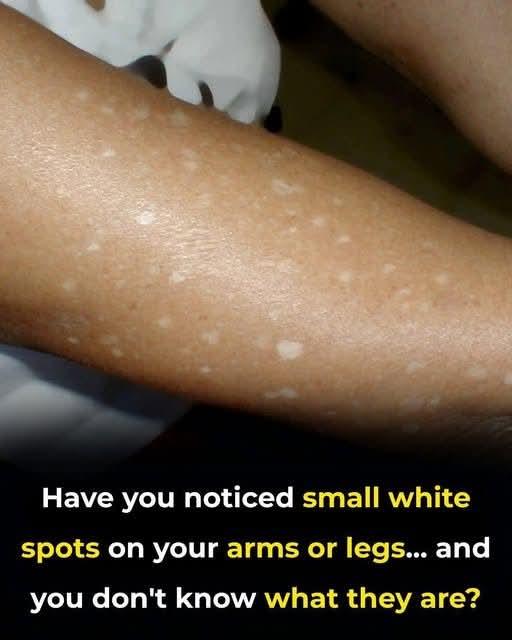
That’s another classic “hook” line you often see online—but the real answer is: small white spots on arms or legs can have several different causes, and most are not dangerous.
Here are the most common explanations:
1. Idiopathic guttate hypomelanosis (very common)
- Small white “sun spots,” often on arms and legs
- More common with age and sun exposure
- Harmless, cosmetic only
- Skin simply loses pigment in tiny patches
2. Tinea versicolor (fungal skin condition)
- Caused by a harmless yeast overgrowth
- Can cause light or dark patches, sometimes slightly scaly
- More noticeable in hot, humid weather
- Treatable with antifungal creams or shampoos
3. Vitiligo
- Autoimmune condition where pigment cells are lost
- Patches are usually more sharply defined and can spread
- Not harmful physically, but may expand over time
- Vitiligo
4. Post-inflammatory hypopigmentation
- Happens after skin injury, rash, or inflammation
- Skin temporarily loses pigment in healed areas
- Often fades over time
5. Dry skin or minor sun damage
- Can make skin look uneven or lighter in patches
- Usually improves with moisturizers and sun protection
When to be more careful
You should consider a dermatologist if:
- Spots are spreading quickly
- They have clear borders and increase in number
- You also notice itching, scaling, or color changes elsewhere
Bottom line
Those posts usually try to make a normal skin finding sound alarming. In reality, white spots are very common and often harmless, but the exact cause depends on how they look and change over time.
If you want, describe what yours look like (size, texture, whether they itch), and I can help narrow it down more specifically.
