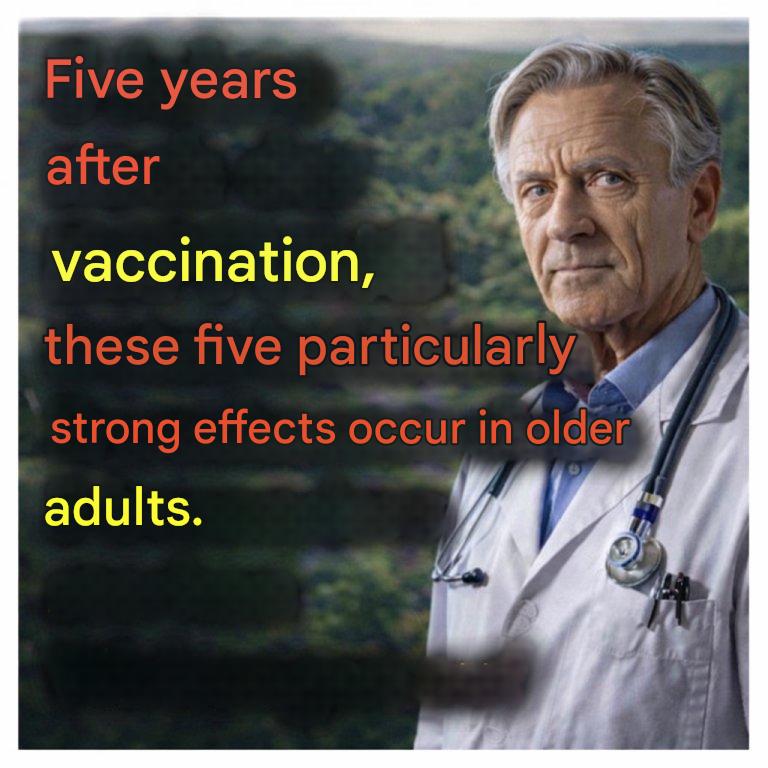
That claim is not supported by medical evidence and is a common example of misleading “long-term vaccine damage” messaging.
Vaccines are studied extensively for both short-term and long-term safety before and after approval. Large population studies and ongoing monitoring systems have not shown a pattern of new, delayed “strong effects” appearing years later in older adults from routine vaccination.
What actually happens with vaccines
Vaccines train the immune system using a harmless part of a pathogen. After that:
- The vaccine material is broken down by the body within days to weeks
- The immune system keeps a “memory,” not the vaccine itself
- Side effects, if they occur, usually happen within days or weeks, not years later
What long-term studies show
Long-term surveillance by health agencies (including systems like those used by the European Medicines Agency) has found:
- No delayed “5-year effects” appearing suddenly in older adults
- No evidence that vaccines cause progressive health decline years later
- Ongoing safety monitoring continues, but no such pattern has emerged
Why posts like this spread
These claims usually:
- Mix real scientific language with fear wording
- Use vague timelines (“5 years later…”)
- Don’t name specific vaccines or data sources
- Rely on emotional impact rather than evidence
Real facts about older adults and vaccines
Older adults may experience:
- Normal aging-related health changes
- Better protection from infections like flu or COVID after vaccination
- Mild short-term side effects (sore arm, fatigue, low fever)
But not “delayed strong effects years later” as a general rule.
Bottom line
There is no scientific evidence for a pattern of severe, delayed effects appearing 5 years after vaccination in older adults. This is a misinformation-style claim, not a medical finding.
If you want, I can break down how vaccine safety is actually monitored over decades so you can see how scientists track long-term effects in real time.
