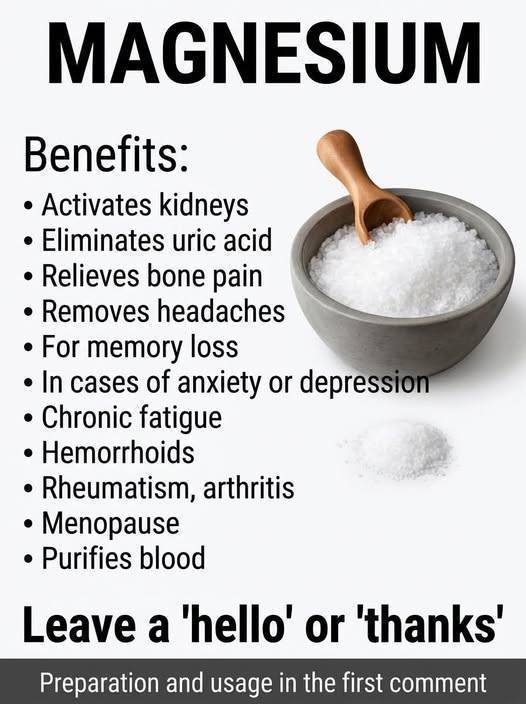
Magnesium is a mineral your body needs to function properly, not just a supplement trend or “miracle cure.”
🧠 What magnesium does in the body
Magnesium is involved in over 300 biological processes, including:
- ⚡ Energy production
- 💓 Heart rhythm regulation
- 🧠 Nerve and brain function
- 💪 Muscle contraction and relaxation
- 🦴 Bone health
- 🍬 Blood sugar regulation
🥗 Natural sources of magnesium
You can get it from food like:
- Nuts (almonds, cashews)
- Seeds (pumpkin seeds, sesame)
- Whole grains
- Beans and lentils
- Leafy greens (spinach)
- Dark chocolate
💊 Why people take supplements
Doctors may recommend magnesium for:
- Low magnesium levels (deficiency)
- Muscle cramps
- Migraine prevention (in some cases)
- Constipation (certain forms)
- Sometimes sleep support (limited evidence)
⚠️ Possible side effects (mostly from too much)
High doses, especially from supplements, can cause:
- Diarrhea (most common)
- Nausea
- Low blood pressure
- Weakness or sleepiness
In people with kidney disease, magnesium can build up and become dangerous.
🚫 Common myths online
- “Magnesium cures anxiety instantly” → ❌ may help some people, but not a cure
- “It fixes all sleep problems” → ❌ only mild supportive effect in some cases
- “More is always better” → ❌ excess can cause side effects
🧭 Bottom line
Magnesium is essential for health, but it is not a universal cure. Benefits depend on whether you are deficient and the correct dose/form used.
If you want, I can explain which type of magnesium (glycinate, citrate, oxide, etc.) is actually best for sleep, constipation, or anxiety, because they work very differently.
