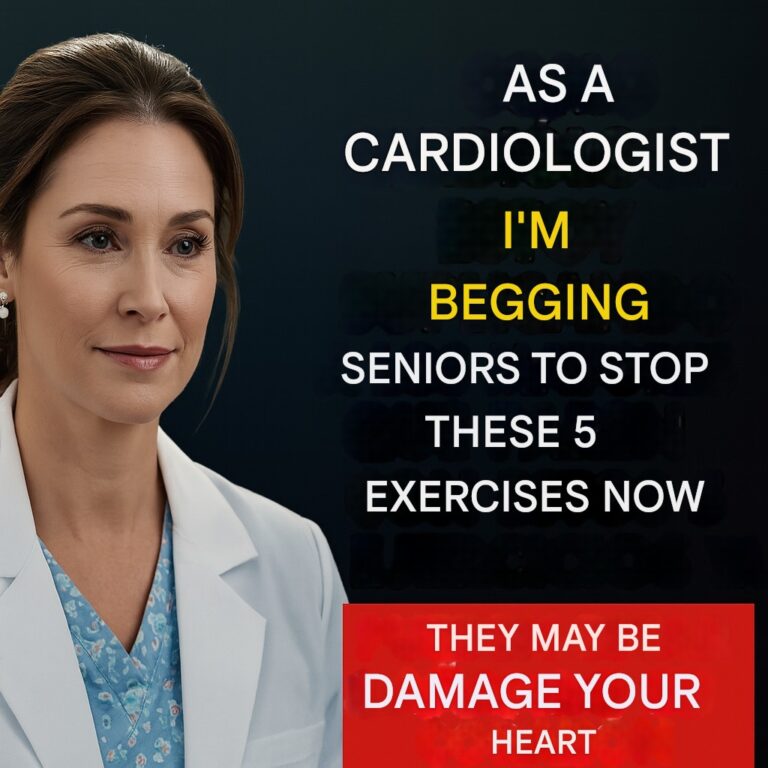
That kind of headline is designed to sound urgent and dramatic, but it’s not how real cardiology advice is given.
A cardiologist would never say “stop 5 exercises for all seniors” in a blanket way, because exercise safety depends on:
- a person’s heart condition (if any)
- fitness level
- blood pressure control
- joint health
- medications
- how the exercise is performed
That said, there are types of exercise that can be risky for some older adults if done incorrectly or without supervision. Here’s the realistic, evidence-based version of what such warnings usually refer to:
⚠️ Exercises that can be risky for some seniors (if untrained or with heart disease)
1. Very heavy weight lifting (maximal straining)
- Especially lifting near-max weights or “one-rep max” attempts
- Can cause sudden spikes in blood pressure
- Risk increases if holding breath (Valsalva maneuver)
2. Intense isometric holds (straining without movement)
- Example: prolonged wall sits or heavy static planks done to exhaustion
- Can sharply raise blood pressure temporarily
3. Sudden high-intensity interval training (HIIT) without conditioning
- Sprinting or intense cycling bursts with no buildup
- Can stress the heart if someone is untrained or has undiagnosed disease
4. Heavy overhead lifting
- Not inherently dangerous, but can spike blood pressure and strain heart in some people
- Risky for those with uncontrolled hypertension
5. Exercise in extreme heat without hydration
- Not the exercise itself, but the conditions
- Can trigger dehydration, arrhythmias, or dizziness
🚫 What this DOES NOT mean
- Exercise is not dangerous for seniors in general
- Most seniors are actually advised to stay active for heart health
- Walking, light resistance training, cycling, and swimming are usually protective, not harmful
❤️ What cardiologists actually recommend instead
For most older adults:
- 150 minutes/week of moderate activity (like brisk walking)
- Light-to-moderate strength training 2–3 times/week
- Balance exercises (to prevent falls)
- Gradual progression, not sudden intensity jumps
🧠 Bottom line
The real medical message is not “stop exercising,” but:
avoid sudden, extreme, or poorly supervised intensity—especially if you have heart disease or uncontrolled blood pressure
If you want, I can break down safe exercise routines for seniors with high blood pressure, diabetes, or heart disease, which is actually what cardiologists focus on in real life.
