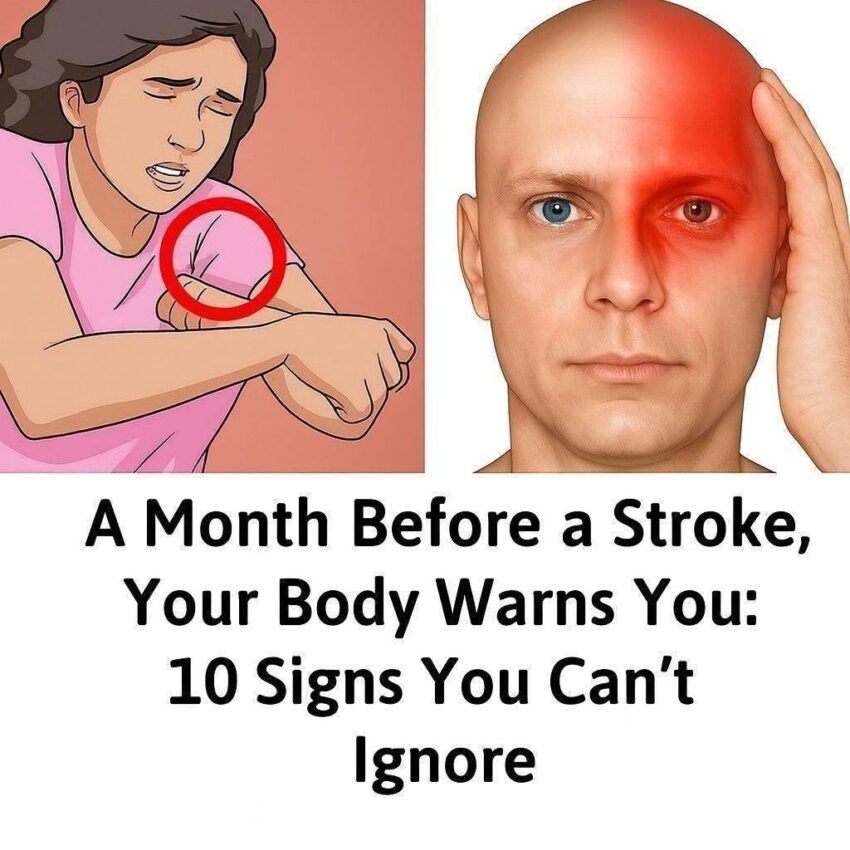
The idea that there are exactly 10 warning signs a month before a stroke is a bit misleading. A stroke caused by Stroke usually doesn’t announce itself on a fixed timeline. However, many people do experience warning symptoms in the days, weeks, or sometimes a month before, most commonly due to mini-strokes (TIAs – transient ischemic attacks) or unstable blood flow to the brain.
These early warning signs matter because they can be your body’s last chance to prevent a major stroke.
Here are 10 important warning signs that may appear before a stroke or TIA:
1. Sudden numbness or weakness (especially on one side)
You may feel weakness in the face, arm, or leg—often just on one side of the body. This is one of the most classic stroke warnings.
2. Brief episodes of speech trouble
Slurred speech, difficulty finding words, or suddenly not being able to understand others—even if it passes quickly—can signal a TIA.
3. Temporary vision problems
Blurred vision, double vision, or loss of vision in one eye that comes and goes should never be ignored.
4. Unexplained dizziness or loss of balance
Feeling suddenly unsteady, dizzy, or unable to coordinate movement may indicate reduced blood flow to the brain.
5. Sudden severe headache
A “thunderclap” headache or unusually intense headache with no clear cause can sometimes precede a serious event.
6. Episodes of confusion or memory lapses
Sudden confusion, difficulty concentrating, or feeling mentally “foggy” can be an early warning.
7. Tingling or numbness that comes and goes
Especially in the face, arm, or leg—this may happen briefly and then disappear.
8. Brief fainting or near-fainting spells
Sudden drops in blood flow to the brain can cause temporary loss of awareness.
9. Difficulty walking or sudden clumsiness
Trouble maintaining coordination, dragging a foot, or stumbling unexpectedly can be a warning sign.
10. Repeated short-lived “mini-stroke” episodes (TIAs)
These are the biggest red flag. Symptoms last minutes to hours and then fully resolve—but they strongly increase stroke risk in the following days or weeks.
Important reality check
- These symptoms do not always mean a stroke is coming, but they should always be treated as urgent.
- Many strokes happen without long warning, so prevention matters more than prediction.
When to seek emergency help
If any of these symptoms appear suddenly—especially facial drooping, arm weakness, or speech difficulty—treat it as an emergency immediately. Quick treatment can prevent permanent brain damage.
If you want, I can also explain:
- how to tell a TIA vs stroke
- or the main causes of stroke in young vs older adults
- or a simple checklist to reduce stroke risk daily
