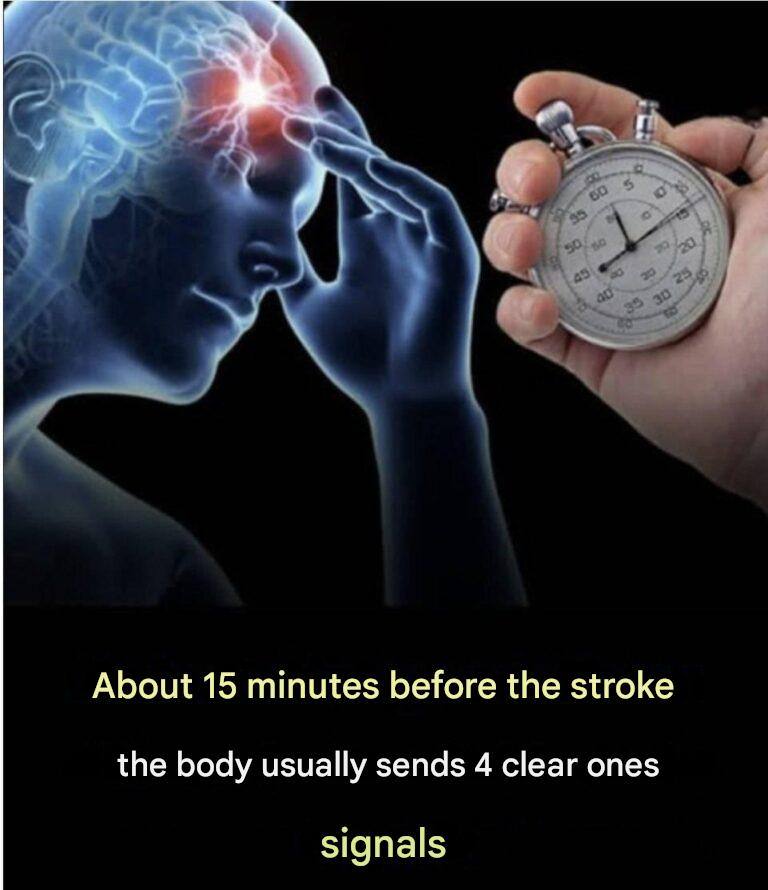
That claim is misleading. There is no reliable evidence that a stroke always gives “4 clear signals 15 minutes before.” A Stroke can happen suddenly, and when warning signs do appear, the timing is unpredictable.
Sometimes people experience a mini-stroke, called a Transient ischemic attack (TIA), which can occur minutes, hours, or days before a full stroke—or not at all.
🚨 Real warning signs of stroke (FAST signs)
Doctors use this simple emergency check:
- F – Face drooping (one side of the face feels weak or uneven)
- A – Arm weakness (one arm drifts down or feels numb)
- S – Speech difficulty (slurred or confused speech)
- T – Time to act immediately
⚠️ Other possible symptoms (not a “15-minute rule”)
Some people may notice:
- sudden vision problems
- dizziness or loss of balance
- severe, unusual headache
- sudden numbness on one side
But these are not guaranteed or timed warning signs.
🧠 Important truth
- Strokes often occur without any warning at all
- When warning symptoms happen, they are usually sudden, not staged in a countdown
- Social media “4 signs before stroke” posts are oversimplified and often incorrect
🚑 What actually matters
If any stroke symptoms appear:
- treat it as an emergency
- call medical help immediately
- do not wait to see if it passes
🧠 Bottom line
There is no proven 15-minute 4-signal warning system for stroke. The safest rule is simple: any sudden neurological change = emergency.
If you want, I can explain how to reduce stroke risk or how TIAs differ from full strokes in a very simple way.
