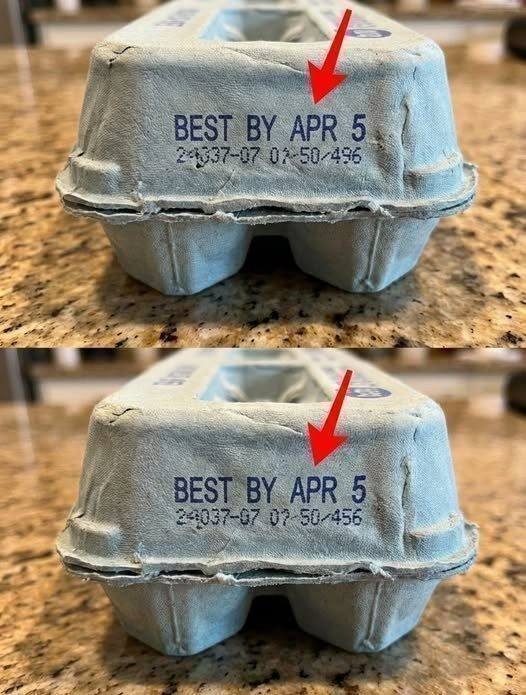
It’s actually a good habit to pay at least a little attention to egg freshness—but you don’t always need to rely strictly on the printed date.
Eggs (Egg) can often stay safe a bit beyond the printed “best before” date if they’ve been stored properly in the fridge.
🥚 How to check if eggs are still good
💧 1. Water float test (simple and reliable)
Put the egg in a bowl of water:
- 🟢 Sinks and lies flat → fresh
- 🟡 Sinks but stands upright → older but usually still OK
- 🔴 Floats → bad (discard it)
👃 2. Smell test
- Crack it into a bowl first
- A bad egg has a strong sulfur or rotten smell
👀 3. Look test
- Fresh egg = thick white, firm yolk
- Bad egg = watery, discolored, or unusual texture
🧊 How long eggs last
- In the fridge: usually 3–5 weeks after purchase
- Hard-boiled eggs: about 1 week
- Room temperature eggs: spoil much faster (especially in warm climates)
⚠️ Why it matters
Eating spoiled eggs can cause foodborne illness like Salmonella infection (Salmonella infection), which causes stomach pain, diarrhea, and fever.
🧠 Bottom line
You don’t need to obsess over expiration dates—but doing a quick check (especially the float or smell test) is a smart habit.
If you want, I can give you a simple “fridge food safety cheat sheet” so you know what can still be eaten and what should be thrown out.
