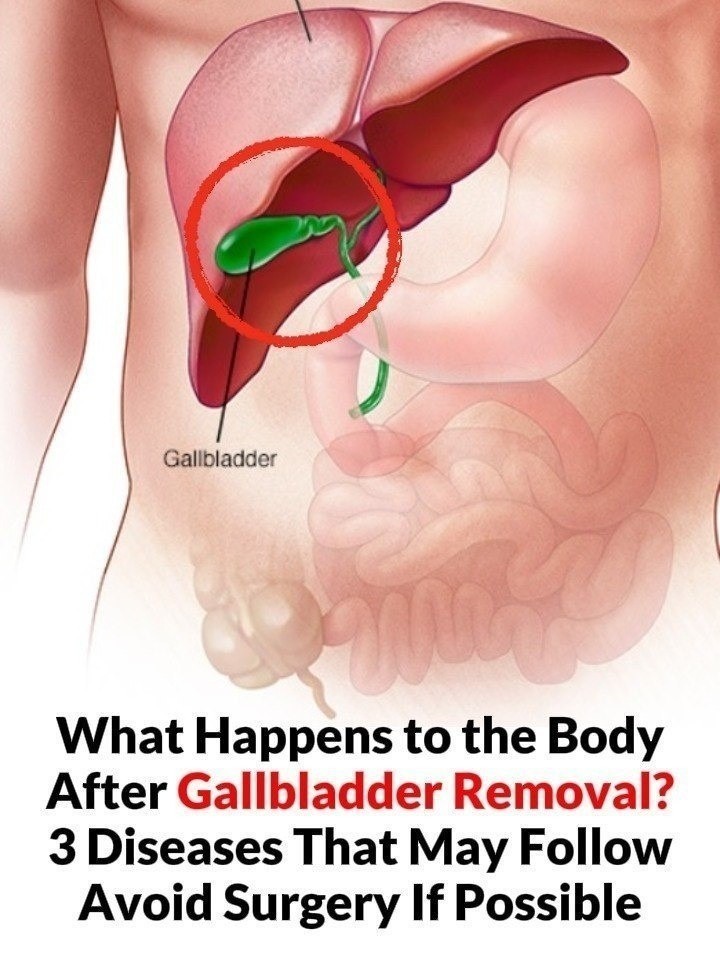
That headline is misleading.
Gallbladder removal is a very common surgery called a Cholecystectomy, and it is usually done because the gallbladder is already causing serious problems (like stones or infection). The idea that you should “avoid surgery if possible” ignores the fact that, for many people, it’s the best and safest treatment.
🧠 What the gallbladder does
The gallbladder stores bile, which helps digest fats. When it causes trouble (often due to stones), it may need removal.
🩺 What actually happens after removal
Most people:
- Digest food normally after recovery
- Live a completely normal life
- Do not develop major long-term disease from removal itself
The body adapts by sending bile directly from the liver to the intestine.
⚠️ Possible short-term effects (not diseases)
Some people may experience:
- Loose stools or diarrhea (temporary)
- Bloating after fatty meals
- Mild digestive changes during recovery
These usually improve over time.
❗ Conditions sometimes linked after surgery (not guaranteed)
Some people may notice:
- Post-cholecystectomy diarrhea syndrome (digestive change, not a new disease)
- Acid reflux-like symptoms in a few cases
- Changes in fat digestion tolerance
But these are manageable and not universal.
🚫 About “3 diseases after surgery”
There is no proven list of 3 diseases that reliably follow gallbladder removal. Claims like that are usually fear-based content, not medical evidence.
In fact, untreated gallbladder disease can be far more dangerous, leading to:
- Infection
- Blockage of bile ducts
- Pancreatitis
🧠 Bottom line
Gallbladder removal is not something to fear unnecessarily. For people who truly need it, it prevents serious complications—not causes new diseases.
If you want, I can explain when surgery is actually necessary vs when it can be avoided safely, in simple terms.
