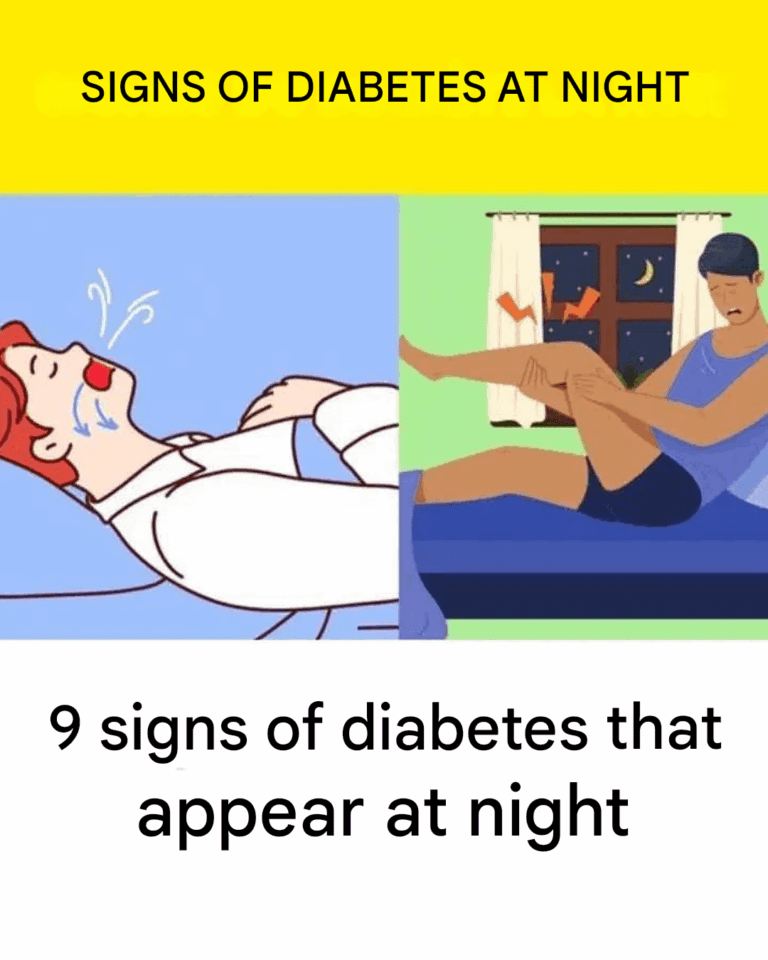
Nighttime symptoms can sometimes hint at issues like Diabetes, but those viral “9 signs” lists are often exaggerated or taken out of context. There isn’t a strict checklist that only shows up at night—but there are patterns worth paying attention to.
Here are some symptoms that people with diabetes or high blood sugar may notice during the night:
1. Frequent urination at night (nocturia)
Waking up multiple times to urinate can happen because excess sugar pulls water out of your body.
2. Excessive thirst
You might wake up with a very dry mouth or feel the need to drink water repeatedly.
3. Night sweats
This can be linked to low blood sugar (especially in people already diagnosed and on medication).
4. Restless or poor sleep
Fluctuating blood sugar levels can disrupt sleep patterns.
5. Leg cramps or tingling
Nerve-related issues (early Diabetic neuropathy) can sometimes feel worse at night.
6. Increased hunger late at night
Blood sugar swings can trigger hunger even after eating.
7. Headaches in the early morning
Often associated with nighttime low or high blood sugar.
8. Fatigue upon waking
Even after a full night’s sleep, you may feel unusually tired.
9. Snoring or breathing issues
Conditions like Sleep apnea are more common in people with diabetes and can worsen blood sugar control.
Important reality check:
None of these signs alone confirm diabetes. Many of them can happen for completely different reasons (stress, dehydration, poor sleep habits, other conditions).
What actually matters:
- Persistent symptoms (day and night)
- Classic signs like frequent urination, constant thirst, unexplained weight loss, and fatigue
- A proper blood sugar test
If you’re concerned, the next step isn’t guessing—it’s a simple blood glucose test or HbA1c test through a doctor.
If you want, I can help you figure out whether your specific symptoms are worth getting checked.
