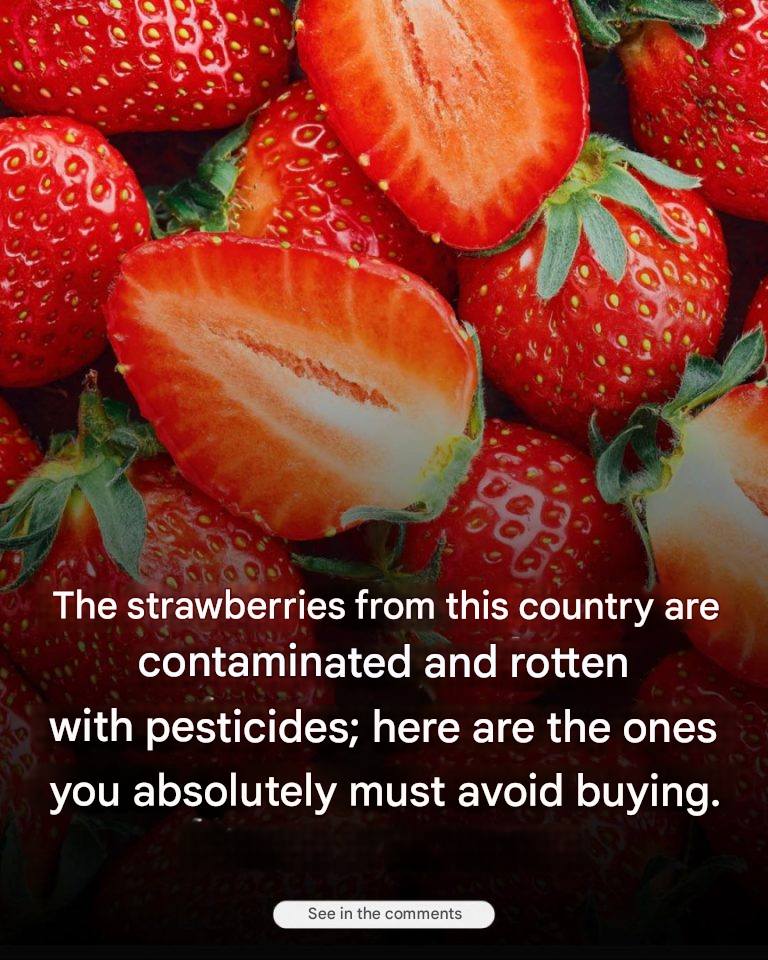
That kind of message is fear-based and usually misleading. It tries to make it sound like strawberries from a specific country are “poisoned” or “rotten with pesticides,” but reality is more balanced.
🍓 The truth about strawberries and pesticides
Strawberry
- Strawberries are one of the crops that can use pesticides in farming (like many fruits and vegetables).
- However, all commercially sold strawberries are subject to food safety regulations and testing in their exporting countries.
- “Contaminated and rotten” blanket statements about an entire country are not accurate or scientifically valid.
🌍 About “which country to avoid”
There is no credible health authority list that says strawberries from a specific country are unsafe to buy entirely.
What matters more than country is:
- farming practices
- storage and transport conditions
- local inspection standards
- freshness at point of sale
Even strawberries from the same country can vary in quality depending on the farm.
⚠️ Real issue: pesticide residues (in general)
- Strawberries can sometimes have higher pesticide residues compared to other fruits
- But residues are usually within legal safety limits when sold in regulated markets
🧼 How to reduce pesticide exposure at home
- Wash thoroughly under running water
- Soak in clean water for a few minutes
- Use vinegar water rinse (mild solution)
- Buy seasonal and locally fresh produce when possible
🟢 Bottom line
There is no single country whose strawberries are universally “unsafe”. Viral posts like this exaggerate risks and ignore food safety systems.
If you want, I can give you a list of fruits and vegetables that typically have the highest vs lowest pesticide residues so you can shop more safely.
