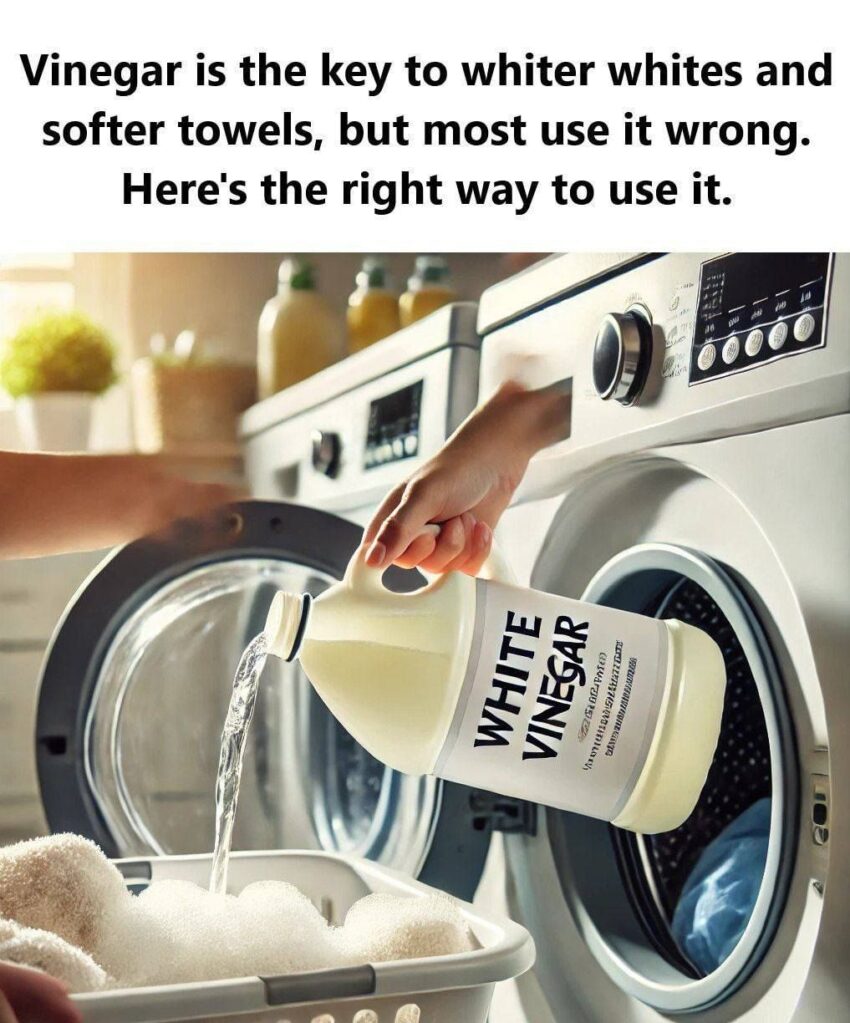
That’s a partially true claim wrapped in clickbait.
White vinegar can help laundry—but it’s not magic, and using it the wrong way can also reduce detergent effectiveness or damage some fabrics over time.
What vinegar actually does in laundry
- Helps remove detergent residue
- Can reduce musty smells
- May soften towels slightly by breaking mineral buildup (hard water)
- Helps with light deodorizing
It does not:
- Make clothes dramatically whiter on its own
- Replace detergent
- Remove deep stains or discoloration
The correct way to use vinegar
1. As a fabric softener (most common use)
- Add ½ cup white vinegar in the fabric softener compartment
- Works best on towels and gym clothes
2. For odor removal
- Add vinegar during the rinse cycle
- Good for sweat smell or musty laundry
3. Pre-soak for tough smells
- Mix: 1 part vinegar + 4 parts water
- Soak clothes 30–60 minutes before washing
Important mistakes people make
❌ Mixing vinegar with bleach
- Produces toxic chlorine gas
❌ Using too much vinegar
- Can weaken elastic over time
- May affect rubber parts in machines if overused
❌ Expecting “whitening magic”
- Vinegar helps with residue, not true bleaching
Better ways to get “whiter whites”
- Use proper laundry detergent
- Sun-dry whites (natural bleaching effect)
- Occasional oxygen bleach (safer than chlorine bleach)
Bottom line
Vinegar is a useful laundry helper for softness and odor control, but it’s not a whitening miracle. Most viral posts exaggerate its effects.
If you want, I can give you a full “make towels super soft again” routine that actually works in one wash cycle.
