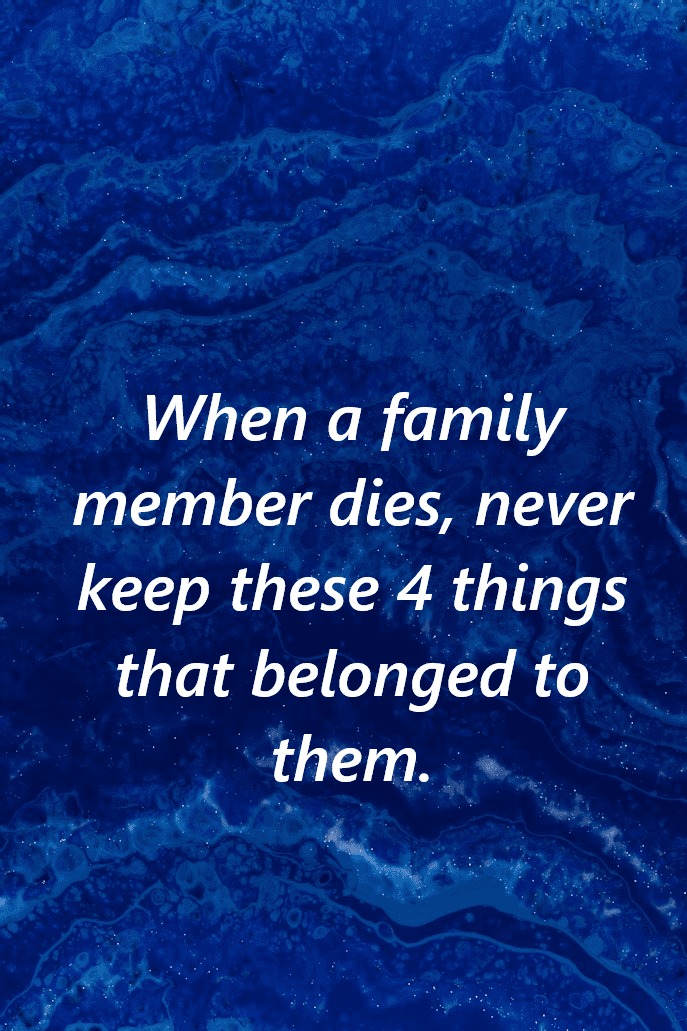
That headline is internet superstition / clickbait, not real advice from medicine, psychology, or any legitimate tradition with universal agreement.
There is no evidence or rule that you must avoid keeping specific items after a family member dies.
🧠 What grief experts actually say
After a death, keeping or removing belongings is completely personal. Psychologists emphasize:
- There is no “correct” timeline
- No objects are inherently harmful
- Grief processing is individual
In grief counseling, what matters is emotional readiness, not rules about objects.
🧳 What people usually do instead
Different people choose different approaches:
- Keep meaningful items (clothes, photos, jewelry)
- Store items temporarily
- Donate clothing or belongings when ready
- Turn sentimental items into keepsakes (e.g., quilts, framed photos)
All of these are normal.
⚠️ Where this myth comes from
These “never keep these 4 things” posts usually come from:
- Social media superstition
- Cultural folklore mixed with fear messaging
- Clickbait content designed to trigger anxiety
They often imply “bad luck” or “negative energy,” but there is no scientific basis for that.
🧠 What actually matters
What can matter emotionally is:
- If items intensify grief too early
- If they prevent adjustment for some individuals
But even then, the solution is gradual emotional processing, not strict rules.
❤️ Bottom line
- No objects from a deceased loved one are “dangerous” to keep
- Decisions should be based on comfort, memory, and readiness, not fear
If you want, I can explain healthy ways people cope with grief and handling belongings step-by-step, which is much more useful than viral lists.
