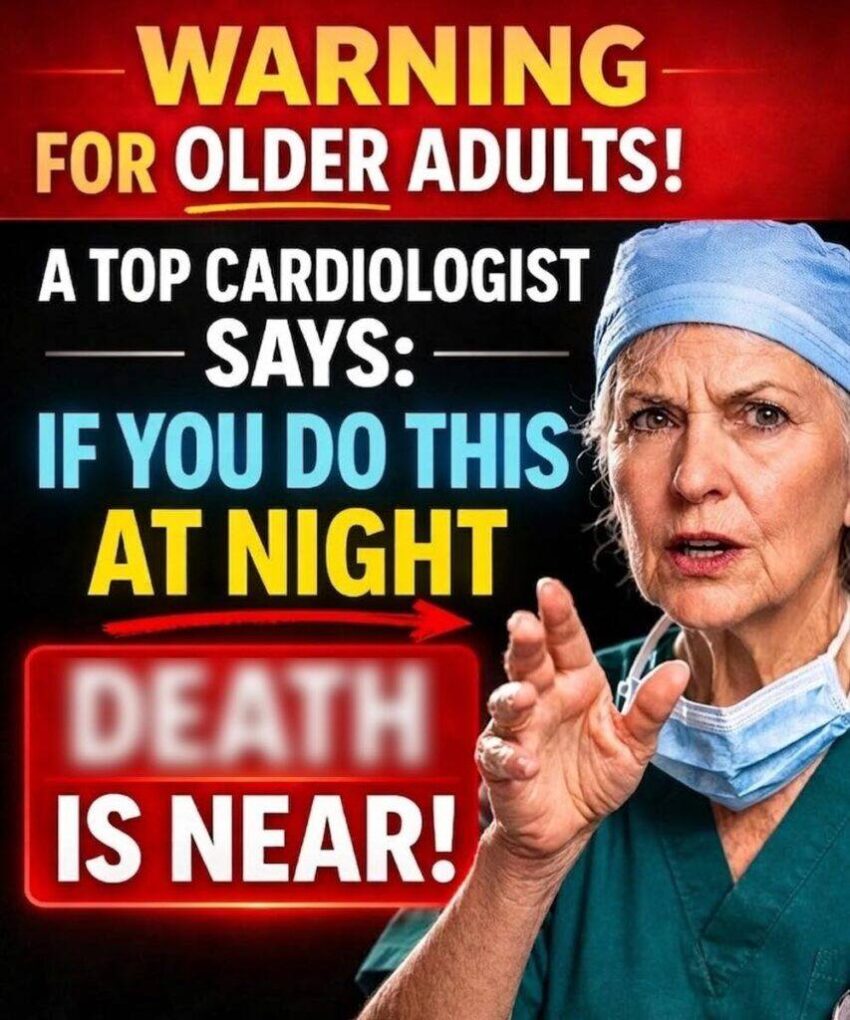
That headline is fear-based clickbait, not a real medical warning.
There is no legitimate cardiology guideline that says a single normal “nighttime habit” means “death is near.”
🧠 Why these posts go viral
They use:
- Fear (“WARNING FOR OLDER ADULTS”)
- Authority (“TOP CARDIOLOGIST” without naming anyone)
- Shock language (“DEATH IS NEAR!”)
This is meant to get clicks, not share accurate medical advice.
❤️ What cardiologists actually worry about at night
Real heart-related nighttime risks are usually linked to existing conditions, such as:
- Severe heart disease
- Sleep apnea
- Uncontrolled high blood pressure
- Heart failure
- Dangerous arrhythmias
But even then, risk is about long-term health and symptoms, not one specific action.
🚨 Real warning signs (not internet myths)
Seek urgent help if someone has:
- Chest pain or pressure
- Severe shortness of breath
- Fainting or near-fainting
- Sudden weakness on one side
- Irregular or very fast heartbeat
🛌 Common normal nighttime experiences (NOT dangerous)
These are often falsely alarmed in videos:
- Waking up to use the bathroom
- Occasional palpitations from stress or caffeine
- Difficulty sleeping
- Mild snoring
🧠 Bottom line
- No single nighttime behavior = “death is near”
- Heart risk comes from overall health conditions, not clickbait triggers
- Sudden alarming claims online are usually misinformation
If you want, you can tell me what “this at night” refers to in the post—I can break down whether that specific habit is actually risky or just internet fear content.
