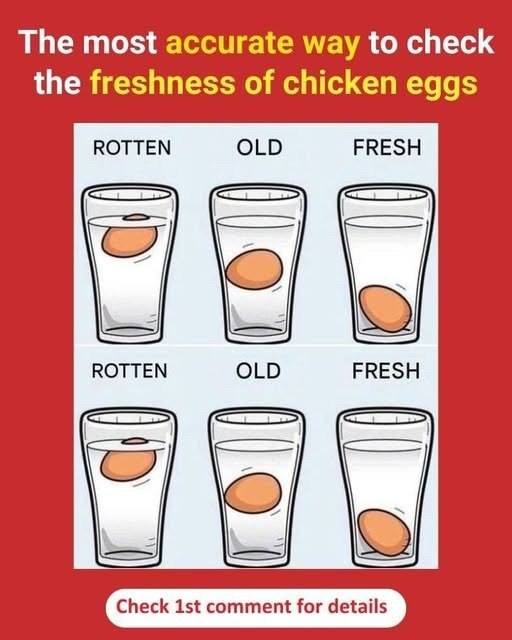
The most accurate practical way to check whether chicken eggs are fresh is a combination of a water float test + cracking and inspection. No single method is perfect, but together they’re very reliable.
🥚 1) Water float test (best quick check)
Put the egg in a bowl of water:
- 🥚 Sinks and lies flat → very fresh
- 🥚 Sinks but stands upright → still OK, but not very fresh
- 🥚 Floats → spoiled / too old, do not use
🧠 Why it works:
As eggs age, air enters through the shell and the air pocket gets bigger → it floats.
👃 2) Crack test (most accurate for safety)
Crack the egg into a bowl and check:
- ❌ Bad egg smell (sulfur/rotten) → discard immediately
- 🟡 Very runny white + weak yolk → older egg
- 🟢 Thick white + firm yolk → fresh egg
👀 3) Visual shell check
Before cracking:
- Clean, uncracked shell → good sign
- Sticky, slimy, or powdery shell → may be contaminated
- Cracks → higher risk of bacteria entry
🕒 4) Expiry / storage guideline (important)
At room temperature (common in warm climates like Pakistan):
- Eggs stay good for about 7–14 days
In refrigeration:
- Up to 3–5 weeks
⚠️ Important safety note
Even if an egg passes the float test, always cook it properly if you’re unsure. Undercooked spoiled eggs can cause food poisoning.
✔️ Bottom line
- 🥇 Most useful: water float test
- 🥇 Most accurate: crack + smell test
- 🥇 Best practice: combine both for safety
If you want, I can also show you a quick “5-second egg freshness trick” used in kitchens and hotels.
