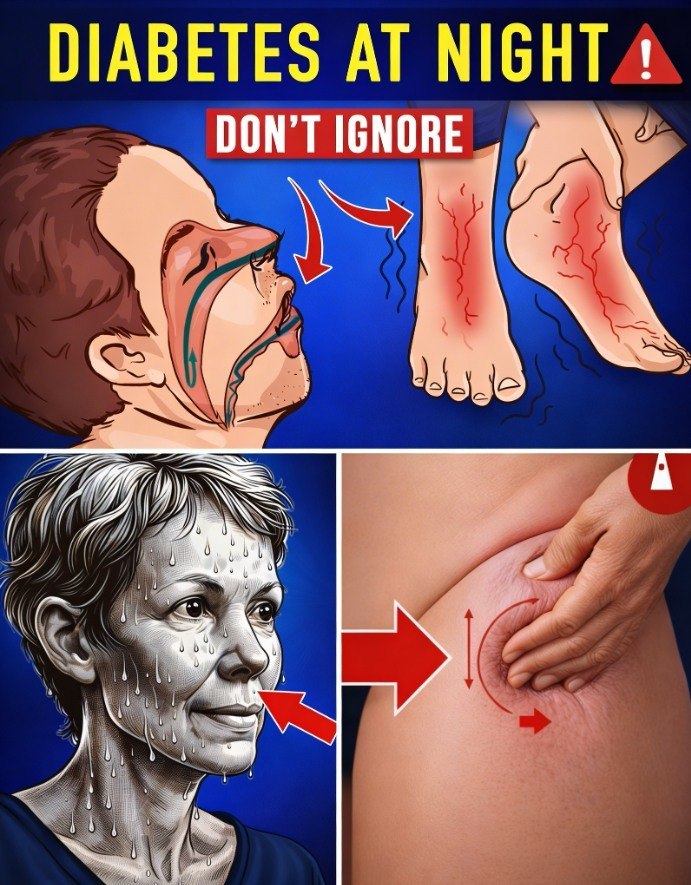
“Diabetes at night” is a serious topic, but the phrase itself is vague. It usually refers to night-time blood sugar problems in people with Diabetes mellitus—either too low (hypoglycemia) or too high (hyperglycemia).
Let’s break it down clearly.
🌙 What “diabetes at night” can mean
1) 🩸 Low blood sugar at night (most dangerous)
This is called nocturnal hypoglycemia.
Possible signs (while sleeping or waking up):
- Night sweats
- Nightmares or restless sleep
- Shaking or fast heartbeat
- Waking up confused or dizzy
- Morning headache or extreme tiredness
2) 📈 High blood sugar at night
This is nocturnal hyperglycemia.
Possible signs:
- Waking up very thirsty
- Frequent urination at night
- Dry mouth
- Poor sleep or discomfort
- High fasting sugar in the morning
⚠️ Why it should NOT be ignored
Night-time blood sugar problems can:
- Disrupt sleep quality
- Cause morning fatigue
- Lead to dangerous sugar swings
- Increase long-term complications if uncontrolled
🧠 Common triggers at night
- Wrong insulin dose or timing
- Skipping dinner or eating too little
- Late-night sugary or heavy meals
- Alcohol consumption
- Not adjusting medication after exercise
🛡️ What helps
- Checking blood sugar before bed (if diabetic)
- Eating a balanced dinner (not too light or too heavy)
- Having a small healthy bedtime snack if advised by a doctor
- Adjusting medication only under medical guidance
- Using a glucose monitor if recommended
🚨 When to seek urgent help
- Frequent night-time sweating + confusion
- Fainting or seizures
- Very high or very low readings repeatedly
- Waking up feeling “out of it” often
✔️ Bottom line
“Diabetes at night” usually means unstable blood sugar during sleep, and it should be taken seriously—but not panicked over. With proper management, it is usually controllable.
If you want, tell me what you’re experiencing (sweating, thirst, waking up often, etc.), and I can help you figure out whether it sounds like low sugar or high sugar at night.
