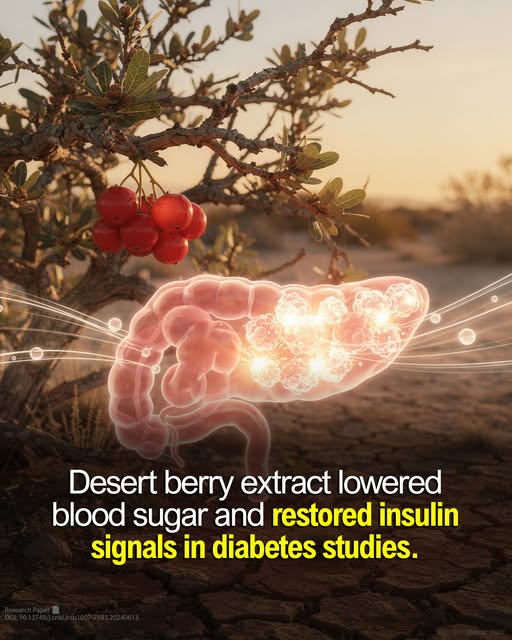
There is some truth behind that claim—but it’s being overstated and taken out of context.
What the research actually shows
A recent study looked at an extract from a desert plant called Nitraria roborowskii (sometimes called a “desert berry”).
- In diabetic mice, the extract:
- Lowered blood sugar by about 30–40%
- Improved insulin sensitivity by roughly 50%
- Helped restore insulin-related cell signaling (PI3K/AKT pathway) (ScienceDaily)
- It also improved fat metabolism and reduced oxidative stress in those animals (ScienceDaily)
So yes—the statement that it “lowered blood sugar and restored insulin signals” is accurate in animal studies.
But here’s the crucial reality check
This does NOT mean it works for humans (yet):
- The research was done in mice, not people
- No large, high-quality human clinical trials have confirmed these effects
- Scientists themselves describe it as a promising lead, not a treatment (Diabetes UK)
Why this matters
Many substances (including other berries like Panax ginseng extracts) have shown similar benefits in animals—improving blood sugar and insulin function—but very few become real medicines for humans (PMC)
Bottom line
- ✅ True (in mice): Desert berry extract improved blood sugar and insulin signaling
- ⚠️ Unproven (in humans): No solid evidence it works as a treatment
- ❌ Misleading takeaway: It’s not a cure or usable remedy yet
If you want, I can break down which natural foods or habits actually do have solid human evidence for improving insulin sensitivity.
