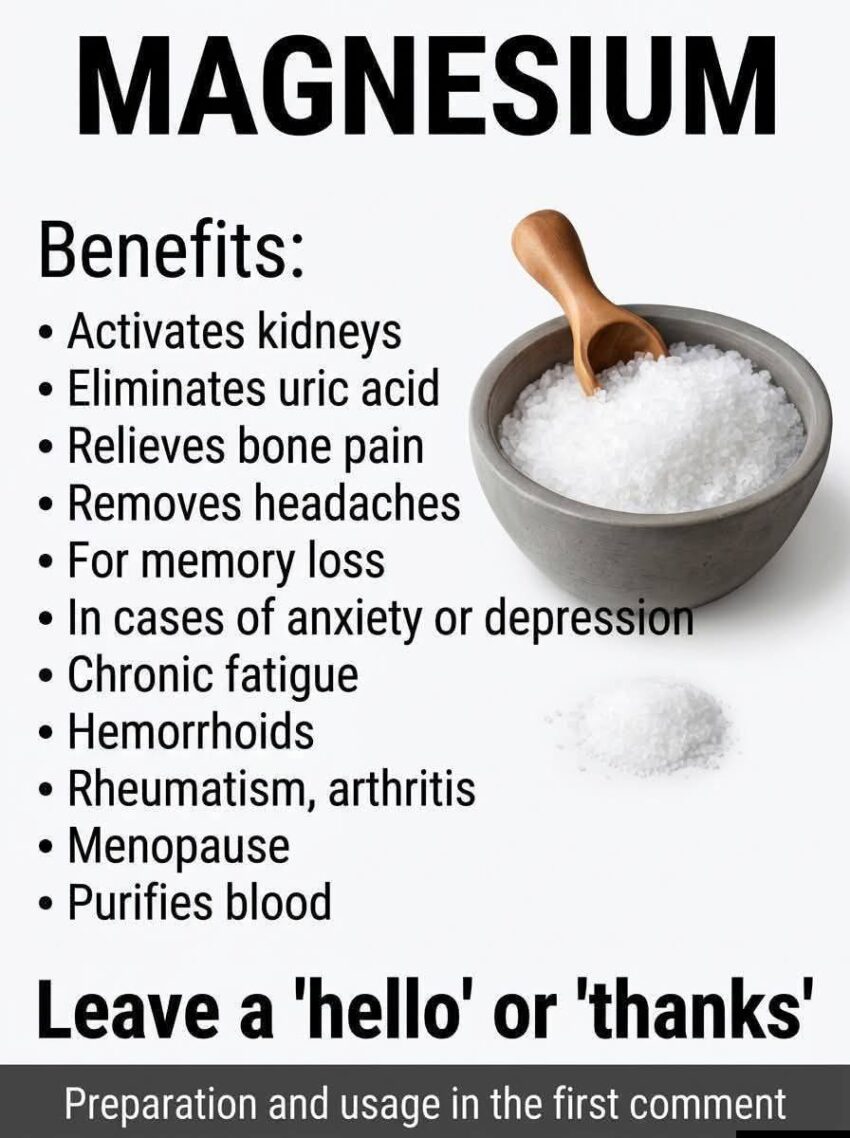
Here’s a detailed overview of magnesium — its roles, benefits, sources, and signs of deficiency:
1. What Is Magnesium?
- Magnesium is an essential mineral and electrolyte required for hundreds of biochemical reactions in the body.
- Plays a key role in:
- Muscle and nerve function
- Heart rhythm regulation
- Bone health
- Energy production and enzyme reactions
2. Health Benefits
- Supports Muscle & Nerve Function
- Prevents cramps, spasms, and supports proper nerve signaling.
- Bone Health
- Works with calcium and vitamin D to maintain strong bones.
- Heart Health
- Helps maintain steady heart rhythm and blood pressure.
- Blood Sugar Regulation
- Assists in insulin function and glucose metabolism.
- Mood & Sleep Support
- Can help reduce anxiety and improve sleep quality.
3. Daily Recommended Intake
- Adult men: 400–420 mg/day
- Adult women: 310–320 mg/day
- Needs may increase with age, pregnancy, or certain health conditions.
4. Signs of Magnesium Deficiency
- Muscle cramps, tremors, or spasms
- Fatigue or weakness
- Irregular heartbeat or palpitations
- Anxiety, irritability, or trouble sleeping
- Nausea or loss of appetite
5. Food Sources
- Nuts & seeds: Almonds, cashews, pumpkin seeds
- Leafy greens: Spinach, Swiss chard, kale
- Legumes: Black beans, lentils, chickpeas
- Whole grains: Brown rice, quinoa, oats
- Other: Avocado, bananas, dark chocolate
6. Supplements
- Magnesium supplements are available in forms like magnesium citrate, glycinate, or oxide.
- Best taken with food to reduce stomach upset.
- Excess magnesium from supplements can cause diarrhea or nausea.
Bottom Line
Magnesium is crucial for muscles, nerves, bones, heart, and energy production. Eating magnesium-rich foods is generally safest, but supplements can help if dietary intake is insufficient.
I can also make a “Top 10 Magnesium-Rich Foods” chart showing how to get enough magnesium daily in simple servings — perfect for a quick reference.
Do you want me to make that chart?
