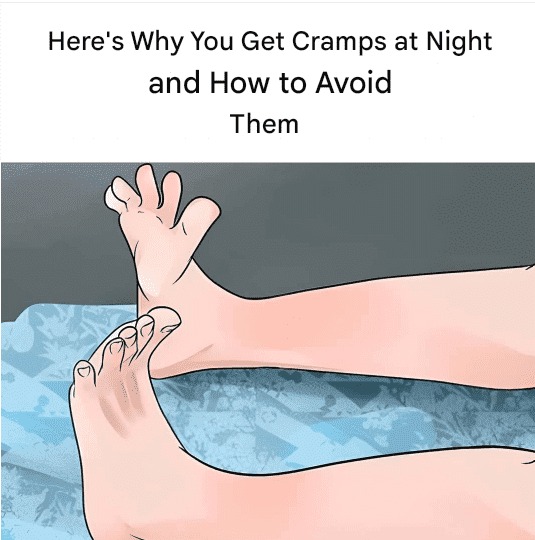
Nighttime leg cramps—those sudden, painful jolts in your calves, feet, or thighs—are common, especially in older adults. Here’s why they happen and what you can do to prevent them:
⚡ Why You Get Nighttime Cramps
- Muscle Fatigue or Overuse
- Standing or exercising a lot during the day can make muscles cramp at night.
- Dehydration or Electrolyte Imbalance
- Low levels of potassium, magnesium, calcium, or sodium can trigger cramps.
- Poor Circulation
- Reduced blood flow to your legs while lying down can make muscles spasm.
- Nerve Compression
- Spinal or nerve issues can send “pain signals” to leg muscles at night.
- Medications
- Some diuretics, statins, or blood pressure medications may increase cramp risk.
- Pregnancy
- Extra pressure on leg muscles and circulation changes can cause cramps.
🏃 How to Avoid Nighttime Cramps
1. Stretch Before Bed
- Calf stretch: Stand facing a wall, one leg forward, heel down, lean in.
- Hamstring stretch: Sit, reach for your toes.
2. Stay Hydrated
- Drink water throughout the day, especially if you exercise.
3. Balance Electrolytes
- Eat bananas, sweet potatoes, spinach, yogurt, nuts.
- Consider supplements if recommended by your doctor.
4. Improve Circulation
- Walk or move legs before sleeping.
- Avoid prolonged sitting with legs bent.
5. Wear Comfortable Shoes
- Supportive footwear reduces leg fatigue and nighttime spasms.
6. Massage & Heat
- Gently massage cramped muscles or use a warm compress before bed.
7. Check Medications
- If cramps are frequent, ask your doctor about side effects from your prescriptions.
💡 Key takeaway: Night cramps are often due to muscle fatigue, dehydration, or low electrolytes, and can usually be prevented with stretching, hydration, and balanced diet. Persistent cramps should be evaluated by a doctor to rule out circulation or nerve issues.
If you want, I can make a 7-day “cramp prevention plan” with stretches, foods, and nightly habits that dramatically reduce leg cramps.
Do you want me to do that?
