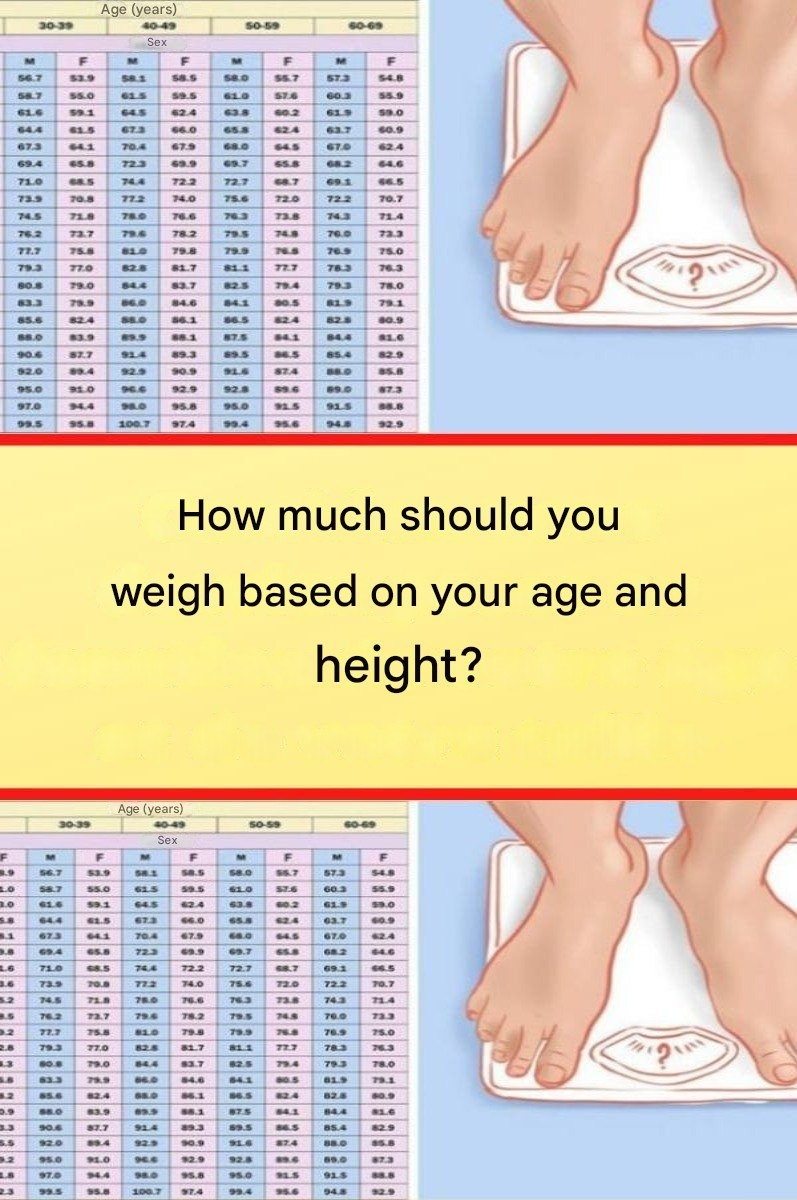
Determining an ideal weight based on age and height isn’t exact, but there are standard methods to estimate a healthy range. Age matters less for weight itself, but it affects muscle mass, bone density, and metabolism, which influence body composition.
Here’s a clear guide:
1. Body Mass Index (BMI) Method
BMI is a common tool to estimate healthy weight ranges.
[
\text{BMI} = \frac{\text{weight (kg)}}{\text{height (m)}^2}
]
- Underweight: BMI < 18.5
- Normal: BMI 18.5 – 24.9
- Overweight: BMI 25 – 29.9
- Obese: BMI ≥ 30
Example:
- Height: 170 cm (1.7 m)
- Healthy weight range:
[
18.5 \times 1.7^2 = 53.5,\text{kg} \quad \text{to} \quad 24.9 \times 1.7^2 = 72,\text{kg}
]
So, a person 170 cm tall should weigh roughly 54–72 kg.
2. Adjusting for Age
- Young adults (20–40): BMI works well.
- Middle-aged (40–60): Slightly higher BMI (23–27) can be healthy due to natural fat increase.
- Older adults (60+): BMI 24–29 may be safer; slightly higher weight can protect bones and energy reserves.
3. Other Considerations
- Muscle vs Fat: A muscular person may weigh more but still be healthy.
- Waist Circumference: Men > 102 cm, women > 88 cm → higher risk of health issues.
- Activity Level: Active individuals may need slightly more weight for muscle.
💡 Quick Rule of Thumb for Adults
- Height in cm – 100 ± 10% gives a rough “healthy” weight.
- Example: 170 cm → 170 – 100 = 70 → 63–77 kg.
If you want, I can make a quick chart showing healthy weight ranges for every height and age group, so you can see exactly where you fall.
Do you want me to make that chart?
