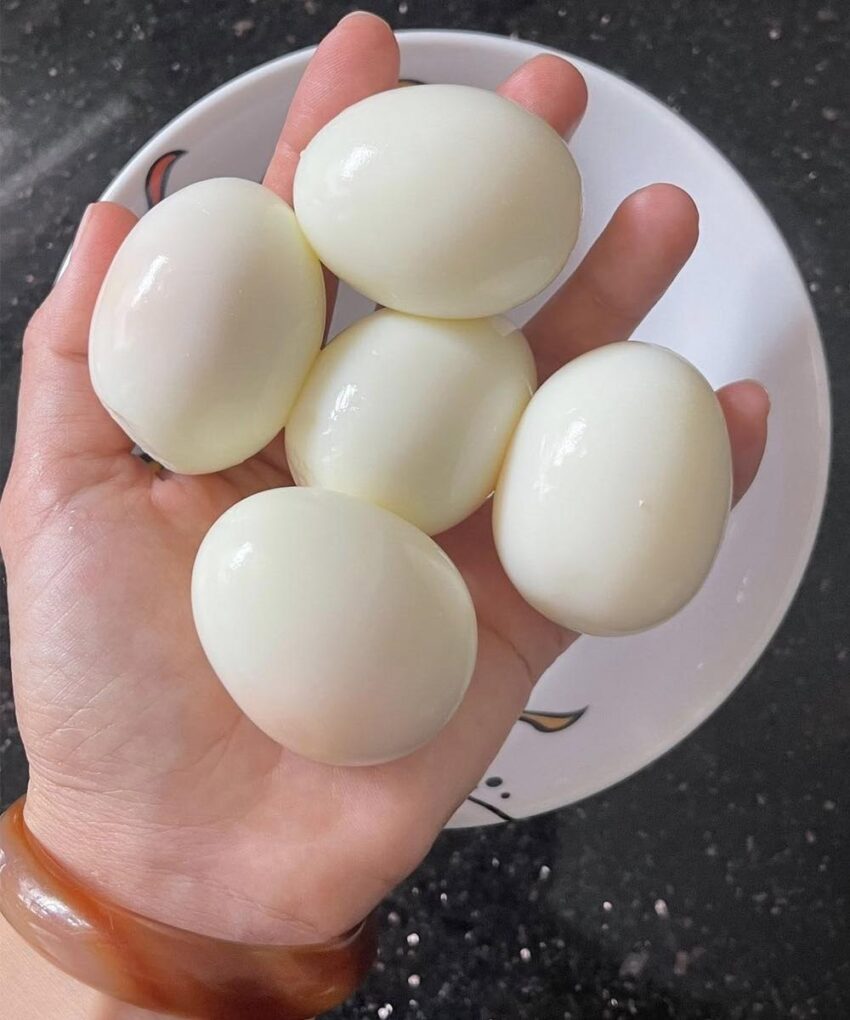
Here’s a complete guide to boiled eggs, including types, methods, and tips for perfect results:
🥚 Overview
- Food Type: Cooked egg (hard or soft boiled)
- Nutrition: High in protein, vitamins B12, D, A, minerals like selenium and iron, and healthy fats
- Uses: Breakfast, salads, sandwiches, snacks, deviled eggs, or garnishes
🥄 Types of Boiled Eggs
- Soft-Boiled Egg
- Whites are fully set; yolk is runny
- Cooking time: 4–6 minutes
- Medium-Boiled Egg
- Whites fully set; yolk slightly creamy
- Cooking time: 7–8 minutes
- Hard-Boiled Egg
- Both whites and yolk fully cooked
- Cooking time: 9–12 minutes
🍳 How to Boil Eggs
- Place eggs in a pot and cover with cold water (~1 inch above eggs)
- Bring water to a boil over medium-high heat
- Once boiling, reduce heat or turn off heat and cover, depending on desired doneness
- Follow the cooking times above for soft, medium, or hard
- Immediately transfer eggs to an ice bath to stop cooking and make peeling easier
💡 Tips for Perfect Boiled Eggs
- Older eggs peel more easily than very fresh eggs
- Adding a pinch of salt or vinegar to the water can prevent cracking
- Ice bath keeps yolks bright yellow and prevents overcooking
- Serve with salt, pepper, or hot sauce, or use in recipes like egg salad
🌍 Fun Fact
- Hard-boiled eggs are a staple for lunches and picnics worldwide and appear in many cultural dishes like Japanese ramen or Thai curries.
- They’re one of the simplest and most versatile protein sources in cooking.
If you want, I can make a quick visual guide showing soft, medium, and hard-boiled eggs with exact timings and peeling tricks so you get perfect eggs every time.
Do you want me to make that guide?
