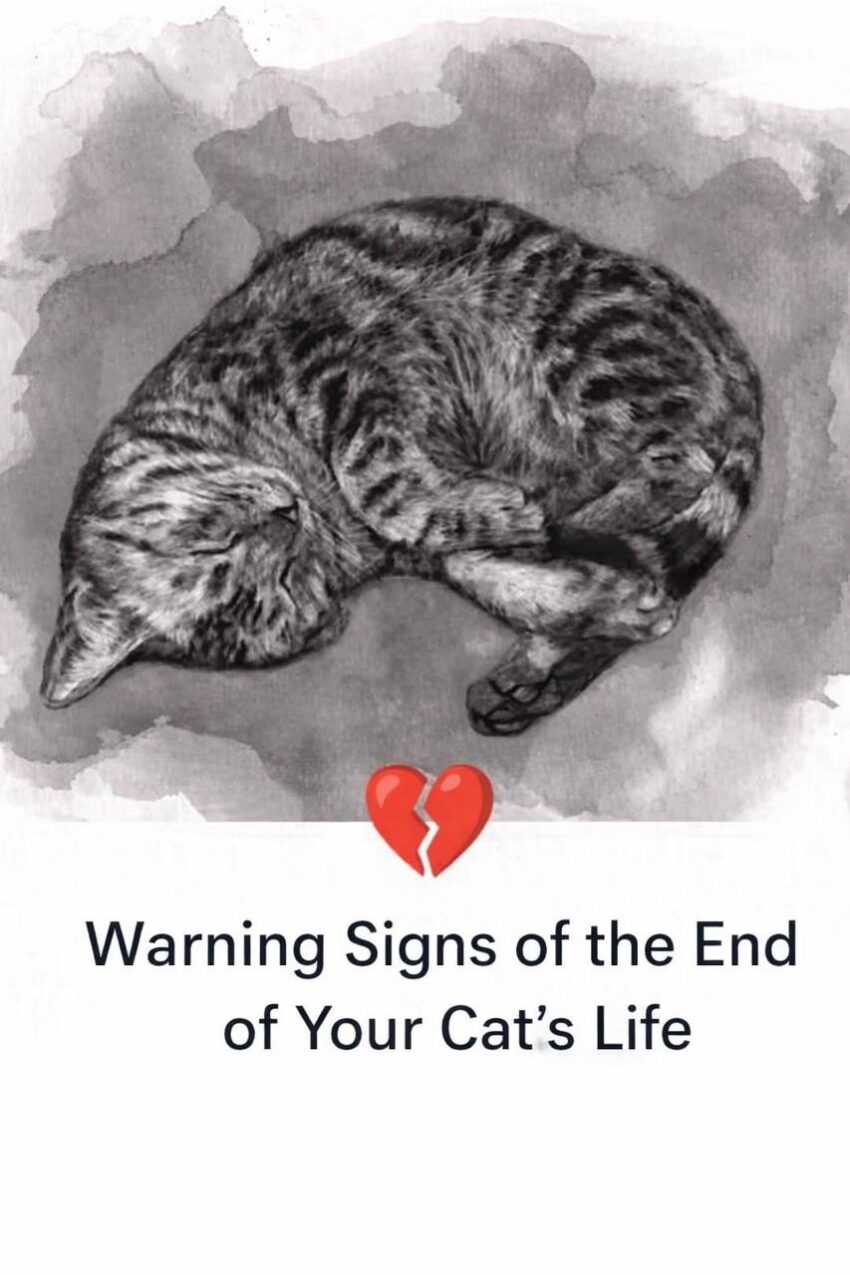
🐱 11 Warning Signs a Cat May Be Near the End of Life
It’s a difficult topic, but recognizing these signs can help you provide comfort and know when to seek veterinary care. These signs don’t always mean death is imminent, but they often indicate serious illness or decline.
⚠️ 1. Loss of Appetite
- Refusing food and water for more than a day or two
⚠️ 2. Extreme Weakness or Lethargy
- Sleeping almost all the time
- Difficulty standing or walking
⚠️ 3. Rapid Weight Loss
- Noticeable thinning or bony appearance
⚠️ 4. Labored or Irregular Breathing
- Very slow, shallow, or struggling breaths
⚠️ 5. Hiding or Withdrawal
- Avoiding people, staying in isolated places
⚠️ 6. Loss of Coordination
- Stumbling, falling, or inability to move properly
⚠️ 7. Changes in Body Temperature
- Feeling unusually cold (especially paws and ears)
⚠️ 8. Poor Grooming
- Messy, greasy, or matted fur
⚠️ 9. Incontinence
- Loss of bladder or bowel control
⚠️ 10. Unusual Odor
- Strong or foul smell from body or breath
⚠️ 11. Changes in Behavior
- Confusion, restlessness, or unusual vocalization
🩺 When to Act
- If your cat shows several of these signs, contact a veterinarian immediately
- Sudden breathing issues or collapse = emergency
❤️ How to Provide Comfort
- Keep your cat warm and quiet
- Offer soft bedding and easy access to water
- Stay nearby for reassurance
🧠 Bottom Line
These signs suggest your cat may be in serious decline. A vet can help determine whether treatment, palliative care, or humane options are best.
If you want, I can help you understand how to tell the difference between treatable illness and end-of-life signs, which can make decisions a little clearer.
