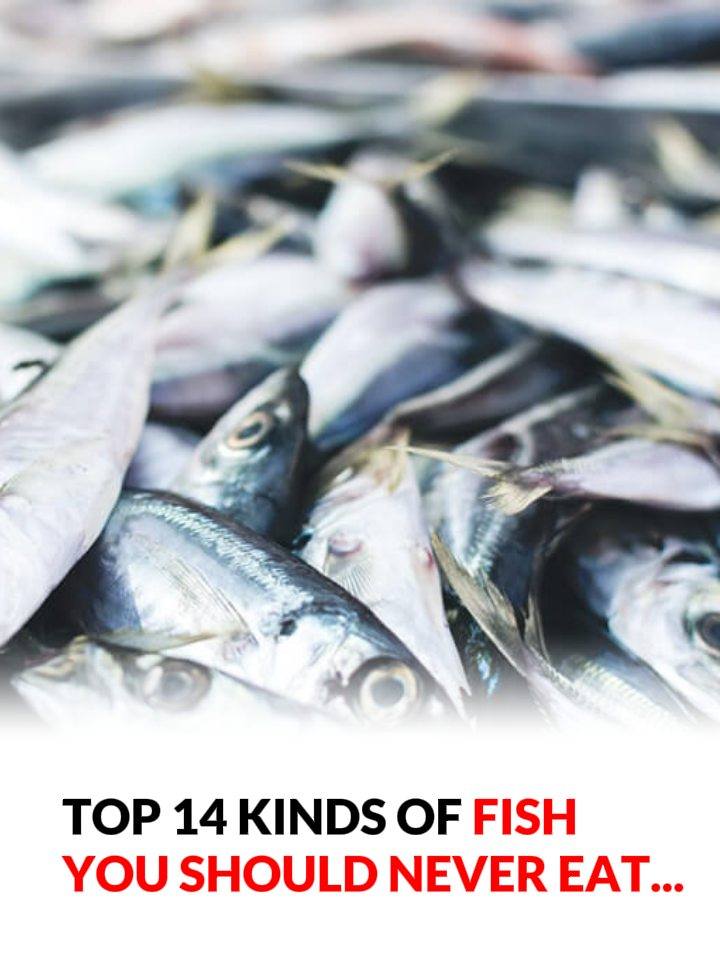
Lists like “fish you should never eat” are often overly dramatic. Most fish can be eaten safely in moderation, but some are best avoided or limited due to high mercury, toxins, sustainability issues, or contamination risk.
Here’s a practical, evidence-based list of fish to avoid or limit, especially for pregnant women, children, or frequent seafood eaters:
⚠️ High-Mercury Fish (Limit or Avoid)
These can increase risk of mercury toxicity over time:
- Shark – Very high mercury
- Swordfish – One of the highest mercury levels
- King Mackerel – High mercury (not the same as smaller mackerel)
- Tilefish – Especially from Gulf regions
- Bigeye Tuna – Higher mercury than canned light tuna
- Marlin – Large predator, accumulates toxins
⚠️ Fish with Contamination Risks
These may contain pollutants like PCBs or be farmed under poor conditions:
- Imported Farmed Salmon – Can contain higher contaminants than wild
- Tilapia (poorly farmed sources) – May have unhealthy fat profile & contamination risk
- Pangasius (Basa) – Often farmed in polluted waters
- Eel – Can accumulate heavy pollutants
- Atlantic Bluefin Tuna – High mercury + overfishing concerns
⚠️ Sustainability / Environmental Concerns
These aren’t always unsafe to eat—but are problematic environmentally:
- Orange Roughy – Overfished, long lifespan (high toxin buildup)
- Chilean Sea Bass – Often overfished (also called Patagonian toothfish)
- Atlantic Cod – Some stocks are depleted
✅ Better Choices Instead
Safer, healthier fish options include:
- Salmon (wild-caught preferred)
- Sardines
- Trout
- Herring
These are low in mercury and rich in omega-3 fats.
🧠 Key Takeaway
- Don’t completely avoid fish—it’s very healthy.
- Focus on low-mercury, well-sourced fish.
- Rotate different types instead of eating one repeatedly.
If you want, I can give you a diet plan for liver health using safe fish options, especially tailored for your region.
